
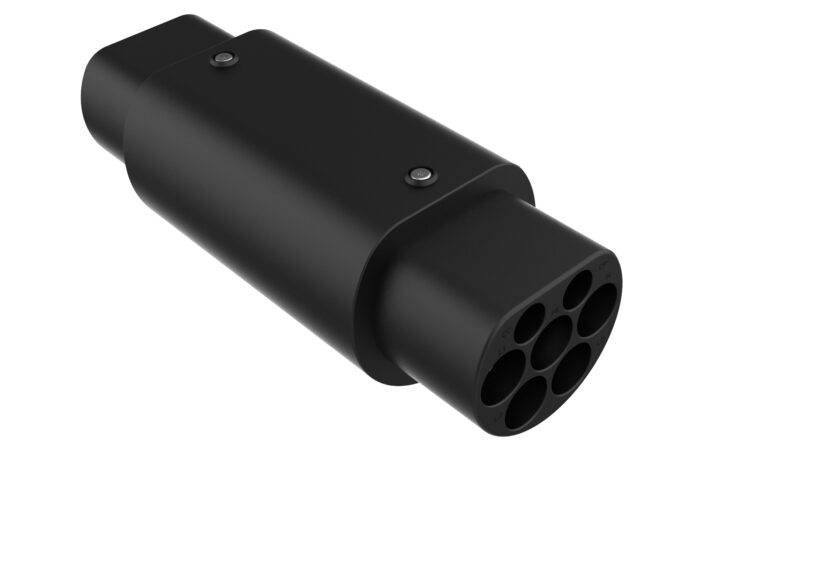
Electric vehicles (EVs) are rapidly evolving, and with them, charging standards are becoming increasingly important,especially for drivers using imported vehicles.
One accessory that can solve certain cross-standard AC charging compatibility issues is a Type 2 to GBT adapter or charging cable. This type of solution can help bridge the gap between Type 2 charging infrastructure and compatible vehicles using China’s GB/T AC charging standard.
This is particularly relevant in markets such as the UAE, where Type 2 AC charging infrastructure is common but a growing number of imported Chinese-market EVs may use GB/T charging connections.
Whether you’re comparing Type 2 to GBT EV adapters, checking prices, or trying to determine whether an adapter will work with your EV, this updated 2026 guide explains compatibility, charging limitations, safety features, prices, troubleshooting, and what to check before buying.
What is a Type 2 to GBT Adapter?
A Type 2 to GBT adapter is a charging accessory designed to provide compatibility between certain Type 2 AC charging equipment and EVs using a compatible GB/T AC charging interface.
However, it is important to understand the direction of the connection.
Type 2 and GB/T are separate charging standards with different connector designs and communication requirements. The correct adapter or cable therefore depends on:
- The connector provided by the charging station
- Your vehicle’s charging inlet
- AC or DC charging
- Charger electrical output
- Vehicle charging specifications
- Adapter direction and design
A product should never be purchased solely because its listing says “Type 2 to GBT.”
How Does a Type 2 to GBT Adapter Work?
For compatible AC charging applications, the adapter provides the necessary physical interface between the charging equipment and vehicle.
Depending on the product design, it can:
- Connect Type 2 AC infrastructure with a compatible GB/T AC vehicle inlet
- Carry the required AC power conductors
- Support the necessary control/communication arrangement
- Provide locking or retention mechanisms
- Support single-phase or three-phase charging when the complete system allows it
Some products may support charging rates such as 7kW, 11kW, or 22kW, but the adapter does not create additional charging power.
Actual charging speed is limited by the lowest-rated component in the system:
Charging station → Adapter/cable → Vehicle onboard charger
Type 2 vs. GBT Connectors: Key Differences
Before choosing an adapter, it is important to understand the difference between GBT and Type 2.
| Feature | Type 2 | GB/T |
| Common market | Europe, UAE and many international markets | China |
| AC charging | Yes | Yes |
| DC charging | CCS2 uses additional DC contacts | Separate GB/T DC interface |
| Single-phase AC | Supported | Supported in applicable configurations |
| Three-phase AC | Supported | Depends on vehicle/equipment implementation |
| Direct physical compatibility | No | No |
One of the most important distinctions is that GB/T AC and GB/T DC are separate systems.
Similarly, Type 2 AC should not be confused with CCS2 DC fast charging simply because CCS2 uses the Type 2 geometry as part of its combined vehicle inlet.
Can You Use a CCS to Type 2 Adapter Instead?
No,not as a substitute for a Type 2 to GBT adapter.
CCS, Type 2, and GB/T represent different charging configurations.
A Type 2 connection normally refers to AC charging, while CCS2 combines the Type 2 AC interface with additional contacts for DC fast charging.
GB/T uses its own AC and DC standards.
Therefore, an adapter designed for one charging conversion should never be assumed to work for another.
Type 2 to GBT Adapter Compatibility in the UAE
Compatibility is particularly important for UAE drivers because the country’s charging infrastructure commonly uses Type 2 for AC charging, while imported Chinese-market EVs may arrive with GB/T charging ports.
A suitable Type 2 to GBT adapter can therefore provide useful AC charging flexibility for certain imported EVs.
However, compatibility needs to be confirmed for the specific vehicle,not merely the manufacturer.
Which EVs Use GB/T Charging?
GB/T is China’s national EV charging standard and is widely used by vehicles produced for the Chinese domestic market.
As a result, a Chinese-market EV imported into the UAE may have:
- GB/T AC charging
- GB/T DC charging
- Both corresponding Chinese-standard interfaces
But vehicles from the same manufacturer officially sold in international markets may use Type 2 and CCS2 instead.
This means the badge on the vehicle does not tell you which adapter you need.
Compatibility with BYD, NIO, XPeng & Other Chinese EVs
Brands such as BYD, NIO, XPeng, Geely, Zeekr, and other Chinese manufacturers may produce different charging configurations for different markets.
For example, a model manufactured for China may use GB/T, while an export version of the same or similar vehicle can use Type 2/CCS2.
Therefore, avoid choosing an adapter based solely on statements such as:
“Compatible with BYD”
or
“Suitable for Chinese EVs.”
Instead, verify the exact charging inlet fitted to your individual vehicle.
Check Your Vehicle’s Charging Standard Before Buying
Before ordering Type 2 to GBT EV adapters, check:
- Your vehicle’s AC charging inlet.
- Your vehicle’s DC fast-charging inlet.
- Whether the charging source is tethered or untethered.
- Maximum AC charging power.
- Maximum supported current.
- Single-phase or three-phase capability.
- Adapter direction.
- Manufacturer compatibility information.
If you are uncertain, provide your EV model, model year, market of origin, and clear photos/specifications of the charging inlet to the supplier before purchasing.
Can You Use a Type 2 to GBT Adapter for DC Fast Charging?
A standard passive Type 2 to GBT adapter should not be assumed to support DC fast charging.
This is one of the most important distinctions to understand when shopping for an adapter.
Type 2 to GBT for AC Charging
Type 2 is primarily an AC charging interface.
A Type 2-to-GB/T AC solution can allow compatible charging equipment to supply AC electricity to a compatible GB/T AC vehicle.
The vehicle’s onboard charger then converts the AC electricity to DC for the battery.
Depending on the complete charging system, AC charging may operate at different power levels.
Why Standard Adapters May Not Support DC Fast Charging
DC fast charging works differently.
With DC charging, high-power DC electricity is delivered through a dedicated fast-charging interface and managed through specific communication and safety protocols.
GB/T DC and CCS2 are not simply different physical plug shapes. They use different interfaces and communication architectures.
Therefore, a passive Type 2-to-GB/T AC adapter cannot turn a Type 2 AC charging connection into a GB/T DC fast charger.
Products designed to bridge different DC fast-charging standards can be considerably more complex and should not be confused with standard AC adapters.
Check Your EV and Charger Specifications
Before connecting any adapter, verify:
- AC or DC charging
- Charger connector
- Vehicle inlet
- Maximum voltage
- Maximum current
- Phase configuration
- Communication compatibility
- Manufacturer instructions
Never use an adapter outside its specified charging mode or electrical limits.
Best Type 2 to GBT Adapters in 2026
The best adapter is not necessarily the one advertising the highest charging speed.
A good Type 2 to GBT adapter should provide the correct connection for your EV while offering appropriate electrical ratings, durable construction, and clearly documented safety specifications.
1. Quikr Premium Cable Type 2 to GBT (5 Meter, 3-Phase)
The Quikr Type 2 to GB/T cable is designed to provide a practical charging solution for compatible EVs requiring cross-standard AC charging.
Key features can include:
- 5-meter cable for flexible parking
- Three-phase capability in compatible configurations
- Up to 32A depending on product specification
- Durable connector construction
- Designed for regular EV charging
- Suitable for compatible Type 2-to-GB/T AC charging applications
Before ordering, confirm your exact vehicle configuration and required charging direction.
2. TUV-Certified Type 2 to GBT Adapter
When comparing adapters marketed with TÜV certification or testing claims, verify the actual documentation and standards covered rather than relying only on the product listing.
Useful characteristics include:
- Compact construction
- Clearly specified voltage/current ratings
- Appropriate IP protection
- Secure locking
- Temperature resistance
- Verified conformity information
Certification claims should be traceable to the actual product being purchased.
3. Fast-Charging Type 2 to GBT Adapter (32A)
A 32A-rated AC adapter or cable can provide higher AC charging capacity than lower-current alternatives where the vehicle and charging equipment support it.
Useful features can include:
- 32A current rating
- Temperature monitoring where provided
- Durable connectors
- Strong cable insulation
- Appropriate environmental protection
However, the phrase “fast charging“ can be misleading.
A 32A Type 2-to-GB/T AC adapter remains an AC charging solution. It should not be confused with DC fast charging.
Type 2 to GBT Adapter Price Guide (2026)
The price of a Type 2 to GBT adapter varies according to electrical rating, cable length, materials, certification, protection features, and manufacturer.
Rather than relying on the outdated 2025 price ranges in the original article, compare products according to their specification and total value.
| Adapter Category | Typical Characteristics | Best Suited For |
| Basic AC adapter | Lower current, basic construction | Occasional compatible charging |
| 32A premium adapter/cable | Higher AC current, stronger construction | Regular EV charging |
| Three-phase solution | Higher AC capability where supported | Compatible EVs and three-phase charging |
| Premium weather-resistant adapter | Higher IP rating, robust materials | Frequent/outdoor use |
Prices can vary significantly between markets and suppliers, so confirm:
- Exact model
- Current rating
- Voltage rating
- Phase support
- Cable length
- Warranty
- Certification
- UAE delivery/support
Do not choose solely based on the lowest price. A poorly specified charging adapter can create compatibility problems and unnecessary electrical risk.
How to Choose the Right Type 2 to GBT Adapter
Choosing the correct adapter requires more than matching two connector names.
1. Check Compatibility
Start by confirming:
- EV charging port
- Charger connector
- Required adapter direction
- AC charging capability
- Maximum vehicle charging rate
- Single-phase or three-phase operation
The adapter must match the actual charging setup, not simply the EV brand.
2. Look for Safety Certifications
Look for clearly documented compliance or certification relevant to the product and market.
Check for:
- Verifiable conformity information
- Electrical ratings
- Manufacturer identification
- Temperature specifications
- Relevant IEC or other applicable standards
- Product warranty
Avoid assuming that every CE, TÜV, or similar logo printed on a listing automatically verifies the complete product.
3. Consider Cable Length
A longer cable can make charging easier when the charging point is not located directly beside the vehicle inlet.
A 5-meter cable provides useful flexibility for many home and public charging situations.
Shorter cables can be:
- Lighter
- Easier to carry
- Easier to store
Choose according to your normal parking environment.
4. Read Reviews
Customer reviews can provide useful information about:
- Connector fit
- Cable flexibility
- Durability
- Real-world vehicle compatibility
- Heat management
- Supplier support
However, reviews should complement,not replace,technical compatibility checks.
A product that works perfectly with another driver’s EV may not necessarily work with yours.
Type 2 to GBT Adapter Safety Features to Look For
Because an EV adapter may carry substantial electrical current for several hours, safety and construction quality are essential.
Overcurrent and Overtemperature Protection
Depending on the adapter design, look for appropriate electrical and thermal protection or monitoring.
The complete charging setup should remain within the rated limits of:
- Charging station
- Cable
- Adapter
- Vehicle
Never intentionally operate an adapter above its rated current or voltage.
IP Rating and Weather Resistance
An appropriate IP rating is particularly valuable in the UAE, where charging equipment may encounter:
- Dust
- Sand
- Humidity
- Outdoor exposure
- High ambient temperatures
Check the manufacturer’s specified IP rating and operating-temperature range.
An IP rating does not mean equipment can be submerged or used outside its stated environmental limits.
Durable Connectors and Locking Mechanisms
A quality adapter should fit securely without excessive movement.
Look for:
- Durable connector housings
- Secure locking or retention
- Strong contact construction
- Heat-resistant materials
- Proper strain relief
- Robust cable insulation
Loose or poorly manufactured connections can increase electrical resistance and contribute to heat generation.
How to Use a Type 2 to GBT Adapter Safely
Always follow the instructions supplied with your specific adapter, EV, and charging station.
The following provides a general overview rather than replacing the manufacturer’s procedure.
Connect the Type 2 Side
Before charging:
- Inspect the adapter for damage.
- Check that the connectors are clean and dry.
- Confirm that the charger and adapter ratings are compatible.
- Follow the specified connection sequence for your product.
Do not force a connector that does not fit naturally.
Connect the GBT Side
Connect the GB/T side to the compatible vehicle inlet according to the manufacturer’s instructions.
Make sure the connection is fully seated and securely retained.
If the vehicle or charger displays an immediate fault, stop and check compatibility rather than repeatedly reconnecting the equipment.
Start and Monitor the Charging Session
Once charging begins, verify that:
- The vehicle recognizes the charger.
- Charging power is within the expected range.
- No warning messages appear.
- The adapter does not become abnormally hot.
- The cable remains positioned safely.
During the first few uses in particular, periodically inspect the connection for abnormal heating or interruptions.
Common Issues & Troubleshooting
Even with a compatible, high-quality Type 2 to GBT adapter, charging problems can occasionally occur. The cause may involve the adapter, charging station, vehicle, electrical supply, or communication between the different components.
Understanding the most common issues can help you determine whether a simple inspection is enough or professional support is required.
1. Slow Charging Speeds
If your EV is charging more slowly than expected, the adapter is not necessarily the problem.
Charging speed can be limited by:
- The charging station’s maximum output
- Your EV’s onboard AC charger
- Single-phase vs. three-phase supply
- Adapter or cable current rating
- Vehicle battery temperature
- Battery state of charge
- Vehicle charging settings
- Dynamic load management at the property
For example, using a 32A-rated adapter does not guarantee a particular charging rate if your vehicle’s onboard charger accepts less power.
Similarly, a three-phase adapter or cable cannot make a vehicle charge at three-phase speeds if the EV only supports single-phase AC charging.
2. Adapter Not Recognized
If the vehicle or charging station does not recognize the connection, first stop the charging attempt and check:
- Whether the adapter direction is correct
- Whether the vehicle actually uses GB/T AC
- Whether the charging source is Type 2 AC
- Whether both connectors are fully inserted
- Whether the connector contacts are clean and undamaged
- Whether the charging station is operating normally
- Whether the adapter specifically supports your EV
Do not repeatedly force or reconnect equipment if the charging system continues displaying an error.
If the adapter works with one charging point but not another, the issue may involve the individual station or communication compatibility.
3. Overheating
Some warmth can occur during EV charging, particularly at higher currents and in hot environments. However, excessive heat should not be ignored.
Possible causes include:
- Loose electrical contact
- Damaged connector pins
- Contamination inside the connector
- Poor-quality materials
- Charging above the equipment’s rated current
- Damaged cable
- High ambient temperature
- Internal adapter fault
If the adapter, plug, or cable becomes abnormally hot, charging should be stopped according to the equipment manufacturer’s instructions.
Do not attempt to cool an electrical connector with water or continue charging through equipment showing signs of melting, discoloration, deformation, or burning.
Maintenance Tips for Your Type 2 to GBT Adapter
Proper care can help maintain the reliability and lifespan of a Type 2 to GBT adapter, especially in the UAE’s hot and dusty environment.
Follow these practical maintenance tips:
- Inspect the connectors regularly: Check for dirt, corrosion, discoloration, bent contacts, cracks, or other physical damage.
- Keep connectors clean and dry: Follow manufacturer recommendations for cleaning. Avoid introducing liquids into electrical contacts.
- Protect it from unnecessary heat: Do not leave the adapter exposed to intense direct sunlight for extended periods when it can be stored safely elsewhere.
- Store it properly: Use a protective case or storage compartment when the adapter is not in use.
- Avoid sharp cable bends: Tight bending can place unnecessary stress on the conductors and insulation.
- Do not drive over the cable: Vehicle weight can damage internal conductors even when exterior damage is not immediately visible.
- Keep protective caps fitted: If provided, use connector caps during storage to reduce exposure to dust and debris.
- Check for unusual heating: If a connection starts running noticeably hotter than usual, discontinue use and investigate the cause.
- Follow the manufacturer’s limits: Never exceed the stated voltage, current, temperature, or environmental specifications.
If an adapter has suffered significant impact, water intrusion beyond its rated protection, damaged contacts, or signs of overheating, have it professionally assessed or replace it rather than continuing to use potentially compromised equipment.
Where to Buy a Type 2 to GBT Adapter?
A Type 2 to GBT adapter can be purchased through specialized EV charging suppliers, manufacturers, and reputable EV equipment retailers.
Before buying, make sure you understand the difference between GBT and Type 2, because choosing an adapter based only on connector appearance can result in purchasing the wrong charging solution.
Type 2 and GB/T are separate charging standards, and AC and DC configurations should also be distinguished. Confirm your vehicle inlet and the charging infrastructure you intend to use before placing an order.
For UAE drivers looking for a compatible charging solution, the Quikrev Type 2 to GBT Adaptor provides an option for suitable cross-standard AC charging applications.
Before purchasing any adapter, ask the supplier to confirm:
- Vehicle compatibility
- Connector direction
- AC charging support
- Maximum current
- Maximum voltage
- Single-phase or three-phase support
- Cable length
- Environmental/IP rating
- Warranty
- After-sales support
Providing your exact vehicle model, model year, market of origin, and charging-port specification can help the supplier identify the appropriate product.
Be particularly cautious with low-cost adapters from unknown sellers that provide little or no technical information. An EV charging adapter handles substantial electrical loads for extended periods, so verified specifications and build quality are more important than finding the lowest price.
Still unsure which Type 2 to GBT Adapter is right for your EV?
Explore reliable adapter options designed for safe, convenient, and compatible charging.
[Explore Type 2 to GBT Adapters]
Quikrev EV
Home Charger 22kW
ADQCC Certified · 22kW · Wi-Fi & Bluetooth · Type 2 / GBT
Final Thoughts: Is a Type 2 to GBT Adapter Worth It?
For the right vehicle and charging situation, a Type 2 to GBT adapter can be an extremely useful accessory.
It is particularly relevant for UAE drivers who own compatible Chinese-market EVs with GB/T AC charging ports but need access to Type 2 AC charging infrastructure.
However, the key word is compatible.
Do not choose an adapter simply because your vehicle was manufactured by a Chinese brand. BYD, NIO, XPeng, Zeekr, Geely, and other manufacturers can produce different charging configurations for different international markets.
Before purchasing, confirm:
- Your exact charging inlet
- Charging standard
- AC charging capability
- Required adapter direction
- Maximum current and voltage
- Phase requirements
- Charger compatibility
It is equally important to understand that an AC Type 2 to GBT adapter should not automatically be considered a solution for DC fast charging. GB/T DC and CCS-based DC charging involve different hardware and communication requirements.
Investing in a properly specified, durable, and appropriately rated adapter can provide greater charging flexibility while helping you use compatible charging infrastructure safely and conveniently.
FAQs
What is a Type 2 to GBT adapter?
A Type 2 to GBT adapter is a charging accessory designed to provide compatibility between certain Type 2 charging equipment and EVs using a compatible GB/T charging interface.
For the common AC application discussed in this guide, it can help a GB/T AC-equipped vehicle connect to suitable Type 2 AC charging infrastructure.
Always check the direction and exact product specifications because Type 2 and GB/T include different charging configurations.
Can Type 2 to GBT adapters support fast charging?
It depends on what is meant by “fast charging.”
Some Type 2-to-GB/T AC adapters or cables can support relatively high AC charging rates, such as 7kW, 11kW, or 22kW, where the charger, adapter, electrical supply, and vehicle all support them.
However, this is not the same as DC fast charging.
A standard passive Type 2-to-GB/T AC adapter cannot convert Type 2 AC charging into GB/T DC fast charging.
Are Type 2 to GBT adapters safe?
They can be safe when they are correctly specified for the charging application, appropriately rated, well manufactured, undamaged, and used according to the manufacturer’s instructions.
Important features to check include:
- Current and voltage ratings
- Temperature specifications
- Durable electrical contacts
- Secure locking
- Appropriate IP protection
- Clearly documented conformity or certification
- Manufacturer warranty and support
Never use an adapter with visible damage, loose contacts, excessive heating, or specifications that do not match the charging system.
Which EVs need a Type 2 to GBT adapter?
A Type 2-to-GB/T AC solution may be useful for an EV equipped with a compatible GB/T AC charging inlet when the driver needs to connect to Type 2 AC charging infrastructure.
This can include certain Chinese-market EVs imported into the UAE.
However, vehicle brand alone does not determine compatibility. The same manufacturer may sell GB/T-equipped vehicles in China and Type 2/CCS2-equipped versions in international markets.
Always inspect your vehicle’s actual charging inlet and confirm its specifications before purchasing Type 2 to GBT EV adapters.