
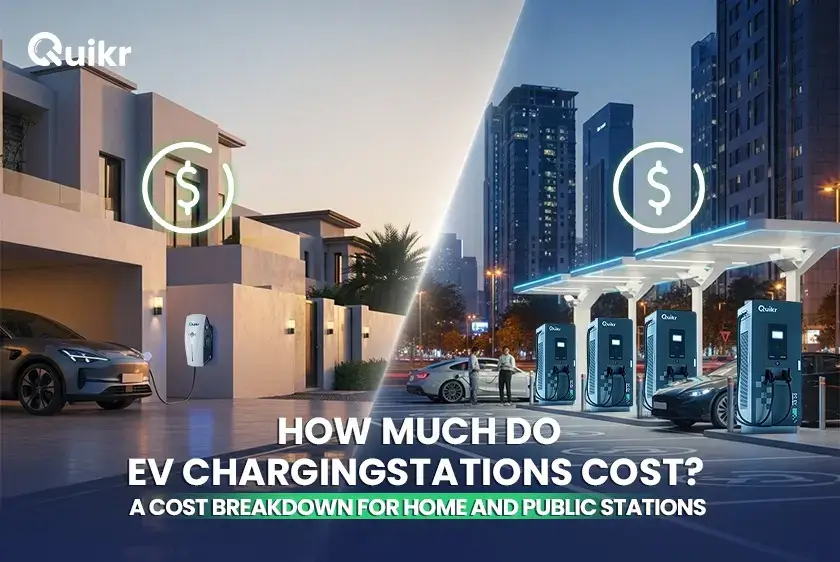
Electric vehicle (EV) charging is rapidly gaining popularity across the UAE as more drivers switch to cleaner, smarter transportation. Alongside this growth, regulatory frameworks, utility guidelines, and electricity pricing structures for EV charging are continuing to evolve, making it increasingly important for EV owners to understand how charging costs actually work. From home electricity tariffs to public charging fees set by operators, the cost of charging an EV is influenced by multiple factors that go beyond simply plugging in a vehicle.
In this article, we break down two key cost perspectives every EV owner should be aware of. First, we explore the cost of charging an electric vehicle, comparing home charging versus public charging and explaining how electricity pricing, charging speeds, and usage patterns affect what you pay. Second, we cover the cost of installing an EV charging station at home, including equipment prices, installation expenses, and factors that can increase or reduce upfront costs. By the end, you’ll have a clear, practical understanding of what to expect,both in daily charging expenses and in the initial investment required to set up EV charging at home in the UAE.
What Factors Determine the Cost of EV Charging in the UAE?
The cost of charging an electric vehicle in the UAE is influenced by several interconnected factors, which can cause prices to vary noticeably from one driver to another. While EV charging is generally more affordable than fueling a petrol vehicle, understanding these factors helps EV owners better estimate running costs and choose the most economical charging option.
Key factors that determine EV charging costs in the UAE include:
- Electricity Tariff Costs: Electricity tariffs play a major role in EV charging costs and can differ based on usage slabs, time of consumption, and utility provider. Residential electricity rates in the UAE typically range between lower and higher bands depending on monthly consumption, which directly affects the cost of home charging.
- How You Choose to Charge (Home vs. Public Charging): Charging at home is usually the most cost-effective option, as it relies on standard residential electricity tariffs and allows overnight or off-peak charging. Public and commercial charging stations—especially fast DC chargers—offer convenience and speed but come at a higher per-kWh cost. Your overall charging expense depends heavily on how often you rely on public infrastructure versus home charging.
- The Emirate You Live In: Each emirate has its own electricity authority and pricing structure, meaning charging costs can vary between Dubai, Abu Dhabi, Sharjah, and other emirates. These regional differences influence both home electricity rates and public charging tariffs, making location an important cost factor for EV owners.
- Type of Charger Used (AC vs. DC): AC chargers are slower but more affordable, making them ideal for home and long-duration charging. DC fast chargers significantly reduce charging time but are priced higher due to infrastructure and power delivery requirements. For example, government-backed networks have announced standardized tariffs where DC charging is priced higher per kWh than AC charging.
- Battery Size and Energy Consumption: EVs with larger batteries naturally cost more to charge fully than smaller vehicles. On average, EVs consume around 15–20 kWh per 100 km, so total charging cost increases with vehicle size, driving habits, and distance traveled.
Together, these factors determine whether your EV charging costs remain minimal or rise significantly, making it essential to balance convenience, location, and charging method when planning your EV usage in the UAE.
How Much Does Public EV Charging Cost in the UAE?
Public EV charging in the UAE is designed for convenience, especially for long trips, city driving without home charging access, or quick top-ups on the go. Costs vary based on the charging provider, charger type (AC vs. DC), charging speed, and location, with DC fast and superfast chargers priced higher due to their speed and infrastructure requirements.
Below is a clear breakdown of major public charging options and their typical electricity costs in the UAE:
- DEWA Green Charger (Dubai): DEWA’s EV Green Charger network is widely available across malls, parks, highways, and key urban locations in Dubai.
- AC (Slow Charging): Around 0.29 AED per kWh, ideal for long parking durations such as shopping or work.
- DC (Fast Charging): Around 0.58 AED per kWh, often with additional parking fees, making it suitable for quicker top-ups during travel.
- Etihad Water & Electricity (EtihadWE – Abu Dhabi & Northern Emirates): EtihadWE provides both AC and DC charging options across airports, hotels, and commercial areas. Pricing typically ranges between 0.80 and 1.20 AED per kWh, depending on charger speed and location, positioning it as a mid-range public charging option.
- Urban Chargers (Nationwide): Urban operates fast DC chargers across multiple emirates, focusing on convenience and accessibility. These chargers are priced higher, usually between 1.00 and 1.50 AED per kWh, reflecting their faster charging speeds and premium locations.
- Tesla Supercharger Network: Tesla Superchargers offer DC superfast charging, capable of delivering very high power for rapid charging. Pricing is typically around 1.20 AED per kWh during peak hours, managed through Tesla’s app. These chargers are available in Dubai and Abu Dhabi and are optimized specifically for Tesla vehicles.
In summary, AC public charging is the most affordable option but requires longer charging times, while DC fast and superfast chargers cost more in exchange for speed and convenience. While public charging is more expensive than home charging, it plays a crucial role in enabling flexible, long-distance, and urban EV travel across the UAE.
How Much Does Home EV Charging Cost in the UAE?
Home EV charging is the most economical and practical option for most EV owners in the UAE. Instead of paying higher public charging rates, you rely on your residential electricity supply, either through a standard socket or, more commonly, a dedicated Level 2 home charger. While installing a home charger involves an upfront cost (typically AED 2,000–5,000), the ongoing cost of electricity is significantly lower and varies based on your emirate’s electricity provider and tariff structure.
Below is a clear breakdown of home EV charging costs across the UAE, based on typical residential tariffs and an example 50 kWh charge (approximately a full charge for a Tesla Model 3):
Dubai
Charging at home in Dubai is managed by DEWA and follows a slab-based tariff system.
- Provider: DEWA
- Tariff: 0.23–0.48 AED per kWh, with lower rates applied to the first 200 kWh consumed each month
- Estimated Cost for 50 kWh: 11.50–24.00 AED
Abu Dhabi
Abu Dhabi residents benefit from competitive residential electricity rates, with additional savings available through off-peak or green tariffs.
- Provider: Etihad Water & Electricity (EtihadWE)
- Tariff: 0.26–0.31 AED per kWh
- Green / Off-Peak Tariff: As low as 0.21 AED per kWh
- Estimated Cost for 50 kWh: 13.00–15.50 AED, or approximately 10.50 AED when charged off-peak
Sharjah
Sharjah follows a tiered pricing model, making home EV charging affordable for moderate electricity users.
- Provider: SEWA
- Tariff: 0.23–0.38 AED per kWh
- Estimated Cost for 50 kWh: 11.50–19.00 AED
Other Emirates (Ajman, Umm Al Quwain, Ras Al Khaimah, Fujairah)
Residents in the northern emirates are served by FEWA or EtihadWE, with consistent residential electricity pricing.
- Provider: FEWA / EtihadWE
- Tariff: 0.26–0.31 AED per kWh
- Estimated Cost for 50 kWh: 13.00–15.50 AED
In summary, home EV charging in the UAE can cost as little as 10–15 AED for a full charge, especially when using off-peak or green electricity tariffs. Compared to public fast charging and traditional petrol fueling, charging at home offers the lowest cost per kilometer, making it the preferred and most cost-efficient solution for EV owners, particularly those with a dedicated home EV charger installed.
How Much Does Commercial EV Charging Cost in the UAE?
Commercial EV charging refers to stations operated by shopping malls, business parks, office complexes, private parking operators, hotels, and other non-residential venues. These chargers are typically installed to serve customers, employees, or visitors, and their pricing reflects both the convenience of location and the operating costs borne by the host business. In many cases, commercial charging costs are set higher than residential tariffs but can vary widely depending on provider, charger type (AC vs. DC), charging speed, and whether the site chooses to subsidize some or all of the cost to attract customers.
Here’s an overview of commercial EV charging costs you’re likely to encounter in the UAE:
- AC Charging at Commercial Locations: Many shopping malls and business parks offer AC (slow to moderate) charging, which is ideal for longer dwell times like shopping, dining, or working hours. Commercial AC charging typically ranges from ~0.30 to 0.60 AED per kWh, reflecting a markup over standard residential electricity rates while remaining affordable for extended stays.
- DC Fast Charging at Private & Commercial Hubs: For faster turnaround,such as quick top-ups while out running errands or during business meetings,commercial sites may install DC fast chargers. These are more expensive to operate and are often priced between ~0.60 and 1.50 AED per kWh, depending on power level, location, and subscription or membership ties.
- Premium and Superfast Charging Options: Some premium commercial locations (e.g., luxury malls, business districts, or private parking operators) offer high-power DC charging, which can be priced at the higher end of the spectrum,upwards of 1.20–1.80 AED per kWh,to reflect rapid charging and convenience.
- Session-Based or Parking-Integrated Pricing: In addition to per-kWh costs, certain commercial operators may structure pricing as per charging session fees, flat parking charges with included charging, or combined rate cards where electricity cost is bundled with parking duration. These models can offer value in specific use cases,especially for customers who plan to stay for fixed periods.
Key Considerations
- Operator Strategy: Some shopping malls and private parking operators may subsidize charging costs as a customer incentive, leading to lower or even free charging during promotions.
- Charger Type: AC chargers are generally cheaper per kWh but slower, whereas DC chargers command higher rates due to faster delivery and higher operating expenses.
- Location: Charging costs may vary based on whether the commercial site is in a high-traffic urban center, business park, or leisure destination.
Overall, while commercial EV charging is typically more expensive than home charging, it plays a vital role in enabling convenient charging during daily activities, work hours, and social outings. Costs vary by operator and technology, but understanding the landscape helps EV owners plan trips and choose the most cost-effective charging option when away from home.
How Much Does It Cost to Install a Home EV Charging Station?
The cost of installing a home EV charging station in the UAE typically ranges between AED 2,000 and AED 5,000, depending on the charger you choose and the complexity of the installation. This estimate usually includes the charger unit itself and standard installation work, though costs can increase if electrical upgrades or additional wiring are required. While basic Level 2 chargers sit at the lower end of the range, advanced smart chargers with app control, energy monitoring, and scheduling features can push costs higher. Overall, home EV charging remains a cost-effective long-term investment compared to relying solely on public charging.
The final installation cost depends on several factors, including:
- Type of Home EV Charger: Standard Level 2 chargers are more affordable, while smart or higher-capacity chargers with advanced features cost more.
- Charger Brand and Features: Well-known brands and chargers with Wi-Fi connectivity, load management, and mobile apps typically come at a premium.
- Home Electrical Infrastructure: Older homes may require panel upgrades, additional breakers, or rewiring, which can increase installation costs.
- Distance From Electrical Panel: Longer cable runs between the charger location and the distribution board add to labor and material costs.
- Property Type and Location: Villas, apartments, and gated communities may have different installation requirements, approvals, or access constraints.
- Permits and Compliance Requirements: Utility approvals, inspections, and regulatory compliance can also affect overall pricing.
By assessing these factors in advance with a certified installer, homeowners can get an accurate quote and choose a charging setup that balances upfront cost with long-term convenience and savings.
How Is EV Charging Cost Calculated?
EV charging cost is mainly based on how much electricity you use, measured in kilowatt-hours (kWh). The larger your vehicle’s battery and the more you charge it, the higher the cost, calculated by multiplying the energy used by the per-kWh rate. Costs also vary depending on where you charge—home charging is usually cheaper, while public chargers, especially fast ones, tend to be more expensive.
Charger type and timing also affect the final cost. Slower AC chargers are generally cheaper, while faster DC chargers cost more per kWh but save time. Electricity rates may vary by time of day, with off-peak charging offering lower prices. Vehicle efficiency also plays a role, as more efficient EVs use less energy and reduce overall charging costs.
How Can You Save on EV Charging in the UAE?
While EV charging in the UAE is already more affordable than traditional fuel, smart choices can help you reduce costs even further,both in day-to-day charging and in long-term setup expenses. By planning ahead, choosing the right equipment, and taking advantage of available incentives and tariffs, EV owners can significantly lower their overall charging costs without sacrificing convenience.
Here are some practical ways to save on EV charging in the UAE:
- Charge at Home Whenever Possible: Home charging uses residential electricity tariffs, which are far cheaper than public fast-charging rates, especially when charging overnight.
- Use Off-Peak or Green Tariffs: Many electricity providers offer lower rates during off-peak hours. Scheduling charging during these times can reduce costs substantially.
- Choose the Right Charger Capacity: Opting for a 7kW or 11kW home charger is often sufficient for overnight charging and is more affordable than higher-capacity options like 22kW chargers.
- Install the Charger Close to Your Electrical Panel: Minimizing the distance between the charger and your distribution board reduces wiring, labor, and overall installation costs.
- Avoid Unnecessary Electrical Upgrades: A pre-installation electrical assessment helps confirm whether your current system can support a charger, preventing expensive panel upgrades.
- Invest in a Smart Charger: Smart chargers with load balancing and scheduling features help optimize electricity usage and automatically charge during the cheapest hours.
- Take Advantage of Incentives and Utility Programs: Some municipalities and utility providers in the UAE offer rebates, subsidies, or reduced tariffs for EV owners, lowering both installation and charging costs.
- Limit Use of DC Fast Chargers: While convenient, DC fast and superfast chargers are significantly more expensive per kWh and should be used mainly for long trips or emergencies.
By combining home charging, smart scheduling, and the right equipment choices, EV owners in the UAE can keep charging costs low while enjoying the convenience of electric mobility.
What Is the Most Cost-Effective Way to Charge an EV in the UAE?
The most cost-effective way to charge an electric vehicle in the UAE is at home using residential electricity. Home charging is cheaper than public charging, especially compared to DC fast chargers, which have higher per-kWh rates.
Using a Level 2 home charger and charging during off-peak hours can further reduce costs. For daily use, overnight home charging is typically the most economical option, while public fast chargers are better suited for occasional or emergency use.
Is There Free EV Charging in the UAE?
Free public EV charging in the UAE was common during the early rollout of charging infrastructure but is now largely being phased out. As of 2025, most public charging networks have moved to a paid model, with users charged per kilowatt-hour for both AC and DC charging.
Typical public charging rates are around AED 0.70 per kWh for AC chargers and AED 1.20 per kWh for DC fast chargers, plus VAT. While some locations such as malls or hotels may still offer limited free charging, these are usually temporary promotions rather than standard practice.
Home charging is not free but remains significantly cheaper than public charging, especially when using off-peak or lower tariff rates.
Public EV Charging vs Home EV Charging: Which Is Better in the UAE?
Home and public EV charging serve different purposes in the UAE, and the better option depends on your setup and driving habits. Home charging is more convenient for daily use, allowing overnight charging and consistent access without waiting or planning around availability. It also gives better control over charging times and energy use but requires private parking and installation.
Public charging provides flexibility, especially for long trips, quick top-ups, or drivers without home chargers. Stations are widely available, but they can be more expensive and may involve waiting during busy periods.
For most EV owners, home charging is the primary option, with public charging used as a backup when needed.
In summary, home EV charging is ideal for regular, everyday driving, offering consistency, convenience, and independence from public infrastructure. Public charging complements home charging by supporting travel, emergencies, and drivers without home installation options. For most EV owners in the UAE, the best approach is a combination of both, using home charging as the primary solution and public chargers as a reliable backup.
EV Charging vs Gas: Which Is Cheaper in the UAE?
EV charging in the UAE is generally cheaper than fueling a petrol car due to lower energy costs per kilometre. A typical EV consumes around 15–20 kWh per 100 km, resulting in an average cost of roughly 5 fils per km, while petrol vehicles often cost around 20–25 fils per km depending on fuel prices and efficiency.
Charging at home further reduces costs due to lower electricity tariffs, while public charging—especially fast charging—can be more expensive but is still often comparable to or cheaper than petrol.
In addition to lower energy costs, EVs typically have lower maintenance expenses and may benefit from incentives such as reduced registration fees and parking benefits. Overall, EVs are more cost-effective to run over time in the UAE.
Final Word
EV charging in the UAE is generally more cost-effective than petrol, especially when using home charging as the primary method. Understanding charging types, costs, and pricing differences helps EV owners reduce long-term expenses and charge more efficiently. As infrastructure expands and tariffs become standardized, making the right setup choice becomes increasingly important.
Quikr makes home EV charger installation simple and reliable. We connect you with certified, utility-approved installers and handle everything from assessment to installation.
Book your EV charger installation with Quikr today and start charging smarter.




15 Comments
ozempic semaglutide bijwerkingen
ozempic semaglutide bijwerkingen
doxycycline side effects red eyes
doxycycline side effects red eyes
metronidazole for bv and alcohol
metronidazole for bv and alcohol
is metronidazole safe for puppies
is metronidazole safe for puppies
acyclovir and kidney pain
acyclovir and kidney pain
terbinafine dermatology overview
terbinafine dermatology overview
ivermectin demodex anti‑parasitic
ivermectin demodex anti‑parasitic
ivermectin strongyloidiasis efficacy
ivermectin strongyloidiasis efficacy
minoxidil men’s treatment insights
minoxidil men’s treatment insights
minoxidil regrowth timeline
minoxidil regrowth timeline
minoxidil women’s central part regrowth
minoxidil women’s central part regrowth
sildenafil cellular mechanism
sildenafil cellular mechanism
orlistat mechanism research
orlistat mechanism research
amoxicillin interaction insights
amoxicillin interaction insights
Drug Half-Life Reference
Drug Half-Life Reference