
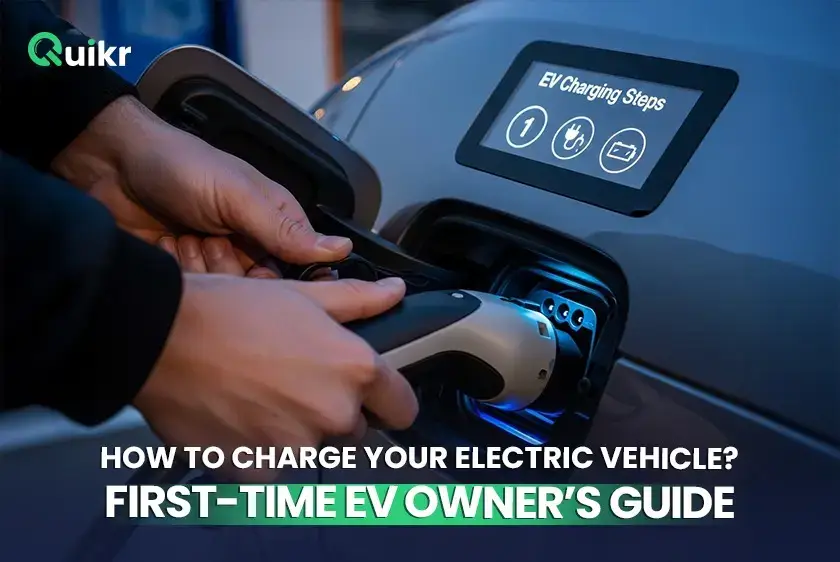
Charging your electric vehicle (EV) for the first time can feel unfamiliar, especially if you’re transitioning from a petrol or diesel car. With different charger types, connectors, apps, and charging speeds, it’s natural to have questions about how to use an EV charging station and how to charge your electric car correctly. The good news is that EV charging is simple once you understand the basics,and it quickly becomes part of your daily routine.
In this guide, we walk first-time EV owners through everything they need to know about charging an electric vehicle, from home charging to public stations. You’ll learn how EV charging works, the different charger types, step-by-step charging instructions, and best practices to charge safely and efficiently. Whether you’re plugging in at home or using a public charging station for the first time, this guide will help you charge with confidence.
Options Available for Charging Your EV in the UAE
Before learning how to charge an electric vehicle, it’s important to understand where you can charge it. Unlike petrol cars, EVs are not limited to fuel stations; they can be charged anywhere electricity is available. In the UAE, EV charging infrastructure is rapidly expanding and now includes home charging, public charging, and commercial charging locations, giving drivers flexibility for daily use, workdays, and long-distance travel.
Below are the main EV charging options available in the UAE and how each one fits into an EV owner’s lifestyle.
Home EV Charging
Home charging is the most common and convenient option for EV owners in the UAE. With a dedicated home EV charger or even a standard power outlet, you can plug in your car after work and wake up to a fully charged battery. Home charging is also usually the most affordable option, as it uses residential electricity tariffs without additional service fees. For most drivers, home charging covers the majority of daily driving needs.
Public EV Charging Stations
Public EV charging stations are widely available across the UAE and are designed for convenience and travel support. These stations are commonly found at highways, fuel stations, public parking areas, and urban hubs. Public chargers include:
- AC chargers, which are slower and suitable for longer parking durations
- DC fast and superfast chargers, ideal for quick top-ups during trips or emergencies
Public charging is essential for long-distance travel and for drivers who do not have access to home charging.
Commercial EV Charging Locations
Commercial charging refers to chargers installed at shopping malls, workplaces, hotels, business parks, restaurants, and private parking facilities. These chargers support what’s known as opportunistic charging,charging your EV while you shop, work, dine, or stay overnight.
- Workplace charging allows employees to charge during office hours
- Retail and hospitality charging lets drivers top up while using the facility
Commercial chargers are typically AC or medium-speed DC chargers and add convenience rather than replacing home charging.
EV Charging at Fuel Stations
Many fuel stations in the UAE now offer DC fast charging, making them a practical stop during long drives or inter-emirate travel. Their locations along major highways make them especially useful for quick charging breaks, similar to traditional refueling stops.
Why Multiple Charging Options Matter
Most EV owners use a combination of charging methods,home charging for daily use, commercial charging during work or errands, and public fast charging for travel. This flexibility ensures that EVs fit seamlessly into everyday life in the UAE without range anxiety or inconvenience.
Together, these charging options make owning and operating an EV in the UAE simple, practical, and increasingly accessible for first-time and experienced EV drivers alike.
How to Charge Your EV via a Public EV Charging Station
Charging your electric vehicle at a public charging station is a straightforward process once you understand the basic steps involved. Whether you’re on a long trip, running errands, or simply topping up while away from home, public chargers offer a convenient way to power your EV. Most charging networks in the UAE now provide clear instructions, mobile app support, and user-friendly interfaces that guide you through selecting a station, initiating a session, and completing your charge securely and efficiently.
Below is everything you need to know about charging your EV at a public charging station:
Key EV Charger Components and Concepts to Know Before Charging Your EV
Before using a public EV charging station, it’s helpful to understand a few core charging concepts. Knowing how chargers differ in speed, power type, and connector design allows you to choose the right charging station for your vehicle, avoid compatibility issues, and charge safely and efficiently. These basics are especially important for first-time EV owners navigating public charging networks.
- Level 1 vs. Level 2 Charging: Level 1 charging uses a standard household outlet and delivers very slow charging, making it impractical for public stations and best suited for emergency or overnight home use. Level 2 charging uses higher voltage and is commonly found at public and commercial stations, offering much faster charging. When choosing a public charging station, look for Level 2 or DC chargers for meaningful charging speed.
- AC vs. DC Charging: AC (Alternating Current) charging sends power to your car’s onboard charger, which converts it to DC—this makes AC charging slower but ideal for longer parking durations. DC (Direct Current) charging delivers power directly to the battery, bypassing the onboard charger and enabling rapid charging. If you’re in a hurry or on a long trip, a DC fast charger is the best option.
- Single-Phase vs. Three-Phase Power: Single-phase charging is common in homes and delivers lower charging speeds. Three-phase charging provides significantly more power and is typically available at public or commercial charging stations. Knowing whether your EV supports three-phase charging helps you choose stations that can deliver faster AC charging.
- Type 1 vs. Type 2 EV Plug: Type 1 connectors are single-phase AC plugs commonly used in North America, while Type 2 connectors are the standard in Europe and the UAE, supporting both single-phase and three-phase charging. It’s important to know which plug your vehicle supports or to carry an appropriate adaptor if needed, especially when using public chargers.
- EV Adaptor: An EV adaptor allows your vehicle to connect to charging stations with different connector types. While many public stations in the UAE use Type 2 connectors, some vehicles may require adaptors for compatibility. Carrying the correct adaptor ensures you can charge confidently across different networks without limitations.
Understanding these components helps you select compatible charging stations, maximize charging speed, and avoid unnecessary delays when charging your EV in public.
Check the Charging Station Compatibility With Your EV
Before starting a charging session, always confirm that the public charging station is compatible with your electric vehicle. Check the connector type (Type 2, CCS, CHAdeMO, etc.), the charger type (AC or DC), and the maximum power output supported by both the station and your EV. Most charging apps and station screens clearly display this information. Ensuring compatibility upfront helps avoid connection issues and ensures you get the expected charging speed.
Locate and Access the Charging Station
Once compatibility is confirmed, park your vehicle correctly within the charging bay so the cable can easily reach your charging port. Public charging stations are often located in designated EV parking spots at malls, fuel stations, or highways. Make sure the station is operational and not reserved or out of service, which can usually be checked via the charging network’s mobile app or the station display.
Authenticate and Start the Charging Session
Most public EV charging stations require authentication before charging begins. This is typically done using a mobile app, RFID charging card, QR code scan, or touchscreen interface at the station. After authentication, select the connector, plug it into your vehicle, and follow on-screen or app instructions to start the session. Once charging begins, the station will confirm power delivery and display charging status.
Monitor the Charging Process
During charging, you can monitor progress through the station’s screen, your vehicle’s dashboard, or the charging network’s mobile app. This allows you to track charging speed, energy delivered, time remaining, and cost. Monitoring is especially useful at DC fast chargers, where charging speeds may slow as the battery approaches full capacity.
Safely End the Charging Session
When charging is complete or when you’ve reached the desired battery level end the session using the app, RFID card, or station interface. Wait for the station to confirm that charging has stopped before unplugging the cable. Carefully disconnect the connector, return it to the charging unit, and ensure the cable is properly stored to keep the station accessible for the next user.
Move Your Vehicle Promptly
After disconnecting, move your vehicle out of the EV charging bay as soon as possible. Many public locations enforce time limits or idle fees to ensure fair access for other EV drivers. Promptly vacating the space helps maintain good charging etiquette and keeps public EV infrastructure efficient and accessible for everyone.
How Long Will It Take to Charge My EV at a Public Charging Station?
Charging time at a public EV charging station depends on the charger type, its power output, and your vehicle’s battery capacity. AC chargers usually take several hours, while DC fast chargers can charge most EVs to around 80% in 20 to 45 minutes.
Charging slows as the battery fills, so many drivers stop at 80% to save time. Actual speed also depends on your vehicle’s maximum charging rate, which may limit how fast it can charge even on high-power stations.
How to Find Public EV Charging Stations?
Public EV charging stations in the UAE can be found using mobile apps, in-car navigation, or charging network platforms. Apps from providers like DEWA, EtihadWE, or Tesla show nearby stations, availability, charger types, and pricing, with filters for connector type and charging speed.
Many EVs also have built-in navigation that locates compatible chargers and plans stops based on battery level. Third-party apps like PlugShare provide additional details such as reviews and station conditions.
Public chargers are commonly located at malls, fuel stations, highways, hotels, and parking areas, making them accessible for daily use and long trips.
How to Pay at Public EV Charging Stations in the UAE?
Paying for public EV charging in the UAE is designed to be user-friendly and flexible, with several convenient methods available depending on the charging network and operator. Most public stations support digital and contactless payment options, ensuring you can start your charging session quickly and securely.
Common payment methods include:
- Mobile Apps: Many charging networks require you to use their app to begin a session and handle payment. After registering your account and linking a payment method (credit card, debit card, or wallet), you can select the station, start charging, and pay directly through the app. The app often shows real-time costs, session duration, and energy delivered.
- RFID or Membership Cards: Some providers offer RFID charging cards tied to your account. Simply tap your card at the charger to authenticate and begin charging, and the cost will be billed to your account. This method eliminates the need to open an app each time.
- QR Code Scanning: Many public chargers display a QR code on the unit. Scanning the code with your smartphone will open the network’s payment portal or app, allowing you to authorize payment and start charging without logging into an app first.
- In-App Wallets and Subscriptions: Some charging networks let you preload credits or subscribe to charging plans. These in-app wallets or memberships can offer discounted rates or streamlined payment for frequent users.
- Direct Credit/Debit Card Payment: A few charging stations allow you to pay directly at the charger using a contactless credit or debit card, similar to contactless POS terminals. This is less common but growing in availability.
Once payment is authorized and your session begins, you can usually monitor cost and progress through the app, the charger screen, or your vehicle’s display. After charging, a digital receipt or summary is typically sent to your email or available within the app for record-keeping.
How to Charge Your EV via a Home EV Charger
Charging your EV at home is simple once the charger is installed. Most users plug in overnight or during off-peak hours for convenience and lower costs. Follow these steps to charge your EV using a home charger:
1. Prepare Your Vehicle and Charger
Before plugging in, make sure your vehicle is turned off and parked close enough to your home charger so the cable reaches comfortably. Most home chargers are installed in garages, carports, or dedicated driveway spaces.
2. Open Your Vehicle’s Charging Port
Locate and open your EV’s charging port this is usually done via a button inside the car, a button on the key fob, or by pressing on the charging flap itself. Once open, you’ll see the port where the charging connector goes.
3. Connect the Charger
Take the charging cable from your home EV charger (or the cable attached to the unit) and plug it into your vehicle’s charging port. Make sure the connector is fully inserted and secure; most EVs will click or lock into place when properly connected.
4. Start the Charging Session
Once connected, your home charger and vehicle will communicate automatically. Depending on your charger model and settings, charging may start instantly or require confirmation via a mobile app, touchscreen, or button on the charger. Some smart chargers allow you to schedule charging times, monitor progress, and control settings from your phone.
5. Monitor Charging Progress
You can check the charging status via your vehicle’s dashboard, the charger’s indicator lights, or the mobile app provided by the charger manufacturer. Most systems will show current battery level, charging speed, and estimated time to full.
6. End the Charging Session
Once your EV reaches your desired charge level (often 80–100% for daily use), unlock and remove the charging cable. Always follow the charger’s instructions to safely disconnect before driving away.
7. Store the Cable
If your charger uses a removable cable, neatly store it on its hook or in the designated holder. Keeping your charging area organized helps maintain charger condition and ensures cables stay clean and untangled.
Charging at home is not only easy but also one of the most cost-effective methods available, especially when you schedule charging during off-peak hours under your utility’s tariff. With a home EV charger, you’ll wake up each day with a full battery and ready to go.
How Long Will It Take to Charge My EV at a Home Charging Station?
Charging time at home depends mainly on the type of home charger you use, your vehicle’s battery size, and your car’s onboard charging capability. Using a standard household outlet (often referred to as Level 1 charging) is the slowest option and can take 20 hours or more to fully charge an EV, making it suitable only for very light daily driving. In contrast, a Level 2 home EV charger significantly reduces charging time and is the most common choice for EV owners in the UAE.
With a typical 7kW home charger, most electric vehicles can be charged from empty to full in 6 to 10 hours, making overnight charging ideal. Higher-capacity home chargers, such as 11kW or 22kW units, can reduce charging time further,provided your vehicle and home electrical system support them. For everyday use, many drivers charge only up to 80–90%, which shortens charging time and helps maintain battery health while still meeting daily driving needs.
Tips for First-Time EV Owners
Charging an electric vehicle for the first time can feel unfamiliar, but with a few practical tips, you’ll quickly gain confidence and make the most of your EV experience. From choosing the right charging habits to maintaining battery health, these best practices will help you charge smarter, avoid common pitfalls, and enjoy a smooth transition to electric driving.
Plan Your Charging Routine
Establish a regular charging schedule that fits your driving habits. For most drivers, overnight home charging ensures you start each day with a full battery. If you regularly make long trips, plan your route to include appropriate public charging stops.
Use Smart Charging Features
Take advantage of smart charger capabilities such as scheduled charging, off-peak charging, and energy monitoring. These features help reduce electricity costs and can extend battery life by avoiding unnecessary rapid charging.
Avoid Frequent DC Fast Charging
While DC fast chargers are convenient, especially on long journeys, frequent use can generate additional heat and potentially accelerate battery wear. Reserve fast charging for when you really need it, and use AC or home charging for daily top-ups.
Know Your Battery Limits
Your vehicle’s onboard charger determines how much power it can accept. Charging at a station with a higher power output than your EV can handle won’t speed up the process. Always match the charger to your vehicle’s capabilities for the best results.
Keep Charging Ports Clean and Dry
Regularly check and clean your EV’s charging port and connectors to prevent dirt, debris, or moisture from interfering with charging. Using covers or protective caps when the port is not in use helps maintain a reliable connection.
Don’t Let the Battery Drop Too Low
Unlike traditional fuel tanks, EV batteries perform best when kept between 20% and 80% for daily use. Avoid consistently letting the battery drop to very low levels, as this can put unnecessary stress on the battery over time.
Be Prepared With Adapters (If Needed)
Some public chargers may use different connector types. If your EV requires a specific adaptor for certain charger types (e.g., Type 1 to Type 2), make sure you carry this with you so you’re never unable to charge when needed.
Monitor Charging Sessions
Whether you’re charging at home or at a public station, keep an eye on the charging session through your vehicle’s dashboard or the charger’s app. This helps you understand charging speed, charging costs (at public stations), and alerts if there’s an interruption.
By following these practical tips, first-time EV owners can charge with confidence, keep costs low, and ensure a long and healthy battery life, making electric driving both enjoyable and efficient.
Common EV Charging Issues and How to Deal With Them
Charging your electric vehicle is usually smooth and reliable, but like any technology, it can sometimes give you trouble. Being aware of common issues and how to address them ,can save time, reduce stress, and help keep your EV ready for the road. Below are the most frequently reported charging problems and practical tips to resolve or avoid them.
Charger or Station Not Working
It’s not uncommon to arrive at a public station only to find the charger offline, malfunctioning, or out of service, often due to maintenance, software glitches, or hardware faults. If this happens, try another nearby station using your charging app’s map, and report the issue to the network provider so they can fix it. Regular maintenance by operators also helps reduce these occurrences.
Compatibility Issues
Sometimes a charging station won’t work with your EV due to plug or protocol incompatibility. Different regions and networks use various connector standards, so always check that the station supports your vehicle’s connector type before plugging in. If needed, carry the correct adaptor and confirm compatibility through your charging app first.
Slow or Interrupted Charging
Slow charging can result from using a charger with lower output than your EV can accept, poor connection, or network issues. Ensure the cable is firmly connected and that the charger provides sufficient power for your EV’s charging capacity. For interruptions, disconnect and reconnect after a moment or try a different charger—sometimes simple reconnection resolves the issue.
Faulty or Dirty Cables and Connectors
A common physical issue is a loose, dirty, or damaged cable or charging port, which prevents proper communication and power transfer. Inspect cables and ports for dirt, debris, or wear, and clean them gently with a dry cloth if necessary. Avoid using excessive force when plugging in or out to protect connectors.
Network or App Payment Errors
Sometimes the station accepts the plug but refuses payment—or your session won’t start due to a payment or app authentication error. First check your network connection and payment method in the charging app, update the app if needed, and try restarting the payment process. If the issue persists, contact the charging network’s support.
Battery or Vehicle Charging Issues
Occasionally, the issue is with the EV itself, such as a battery management system limiting charge due to extreme temperature or internal fault. Check your vehicle’s dashboard for error messages, restart the vehicle, or try a different charger. If problems persist, have a technician inspect the battery system.
By understanding these common issues and how to address them, you’ll be better prepared to handle charging challenges and maintain a reliable, stress-free EV experience. Regular maintenance of your charging equipment and proactive checks before plugging in can also minimize most of these problems.
Why the EV Charger Doesn’t Start Charging?
If your EV charger doesn’t start charging, the issue is often simple and easy to fix. One of the most common reasons is that the charging connector is not fully or securely inserted into the vehicle’s charging port. Always double-check that the plug is firmly connected and locked in place before attempting to start the session.
Another frequent cause is that the vehicle is not in park or fully switched off, which can prevent charging from initiating. You should also inspect the charging port and connector for dirt, debris, or obstructions, as these can interfere with the connection. If charging still doesn’t begin, try restarting the session via the app or charger interface, or unplugging and reconnecting the cable. In most cases, ensuring a secure connection and proper vehicle status resolves the issue quickly.
Why Does My Payment Fail?
Payment failures at public EV charging stations are usually related to app, connectivity, or payment method issues rather than the charger itself. A weak internet connection can prevent the charging app from authorizing the session, so make sure your phone has a stable mobile data or Wi-Fi connection. In some cases, the charging app may simply need to be refreshed or restarted to complete the payment process.
If the issue continues, try using a different payment method, such as another credit or debit card, or switch to an alternative option like contactless payment, RFID card, or QR code scanning if available. It’s also a good idea to check that your card details are up to date and that international or online payments are enabled. Most payment issues are resolved quickly by restarting the app or changing the payment method.
EV Charger Frozen or Not Responding: What to Do?
If a public EV charger appears frozen or is not responding, the issue is often caused by a temporary software or communication glitch. Start by unplugging the charging cable from your vehicle, waiting 10–15 seconds, and then reconnecting it. This simple reset allows the charger and vehicle to re-establish communication and often resolves the problem.
If the charger still does not respond, try ending and restarting the session through the charging app or screen. Should the issue persist, contact the charging network’s customer support, which is usually accessible directly from the app or displayed on the charger. Most operators provide quick-response helplines and can remotely reset the charger or guide you to a nearby alternative station.
How to Use QR Codes for EV Charging Payments?
Using QR codes to pay for EV charging is one of the simplest and most convenient payment methods available at many public stations in the UAE. When you arrive at a charging station that supports QR payments, you’ll typically find a QR code displayed on the charger’s screen or body. Start by opening your smartphone’s camera or a QR code scanner app and pointing it at the code.
Once the QR code is scanned, you’ll be directed to the charging network’s payment page or app interface. From there, you can select your preferred payment method,such as a debit/credit card or digital wallet,and authorize the charging session. After payment is confirmed, follow the on-screen prompts to plug in your EV and begin charging. This method eliminates the need for physical cards or accounts in some cases, making it ideal for quick, on-the-go charging stops. Always ensure you complete the payment and session setup before connecting the charger to your vehicle to avoid errors.
Final Word
Charging your EV doesn’t have to be complicated. Once you understand the basics—charger types, connectors, and payment methods—the process becomes straightforward. As EV infrastructure continues to expand across the UAE, charging is becoming more accessible and efficient for everyday use.
For a reliable and cost-effective solution, home EV charging remains the most practical long-term option. Quikr‘s certified, utility-approved installers ensure installations are completed safely, efficiently, and in full compliance with local regulations.
If you are planning to install a home EV charger in the UAE, contact Quikr’s EV charger installation experts for a fully compliant, end-to-end service delivered by certified professionals.




10 Comments
hello world
hello world
cenforce 200 directions
cenforce 200 directions
sildenafil moa
sildenafil moa
levitra vardenafil
levitra vardenafil
semaglutid tablet
semaglutid tablet
propecia for men
propecia for men
minoxidil 2% vs 5% for women
minoxidil 2% vs 5% for women
safe sildenafil purchase
safe sildenafil purchase
orlistat risk assessment
orlistat risk assessment
Peak Concentration Overview
Peak Concentration Overview