
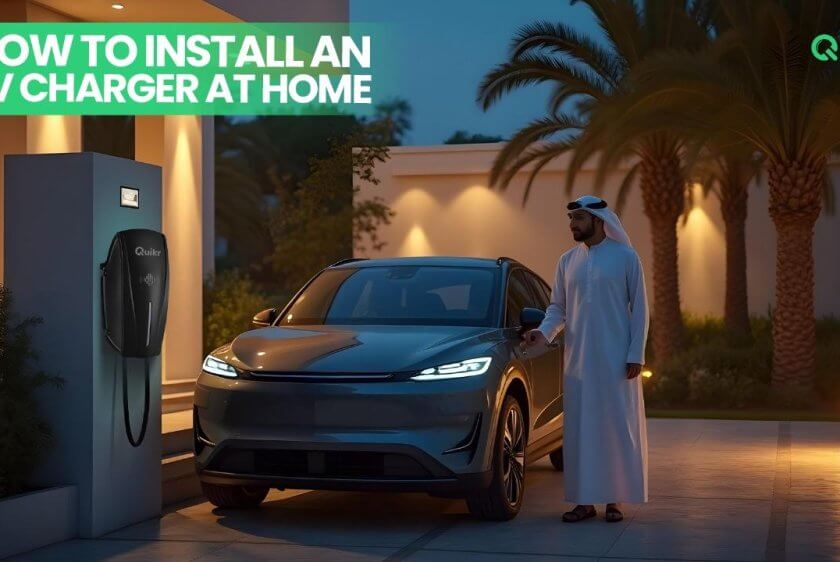
Charging your car at home isn’t just about convenience,it’s about transforming the way you live, drive, and connect to the future. In the UAE, where innovation meets lifestyle, more drivers are choosing to install EV chargers right where they live. But how do you actually go from “thinking about it” to “plugging in” at home?
This guide walks you through how to install EV charger at home UAE, step by step. From choosing the right charger and assessing your home’s electrical capacity to permits, utility approvals, professional installation, and apartment requirements, we’ll help you understand what you need for a safe, convenient, and reliable home charging setup.
Why More UAE Drivers Are Charging at Home
Electric vehicles are everywhere now,from Teslas driving along Sheikh Zayed Road to sleek Porsche Taycans parked in villa driveways. The UAE’s shift to electric is real and accelerating.
Public charging infrastructure continues to expand, but nothing beats the convenience of plugging in at home while you sleep, work, or unwind. Home charging gives you:
- Total control over when and how you charge
- Peace of mind knowing your EV can be ready each morning
- The freedom to reduce your dependence on public charging stations
- Greater convenience for everyday driving
- Access to smart charging features on compatible chargers
And in the UAE, where convenience and smart living go hand in hand, bringing EV charging directly to your home simply makes sense.
What Types of EV Chargers Can You Install at Home?
Before choosing a charger, it helps to understand the different charging technologies available and which are practical for residential use.
The right option depends on your vehicle, daily mileage, electrical supply, parking arrangement, and desired charging speed.
Level 1 vs. Level 2 EV Chargers
Level 1 charging uses a relatively low-power electrical supply and provides slow charging. While it may be sufficient for drivers with very limited daily mileage, it is generally less practical for regular EV use.
Level 2 charging provides considerably more power and is the more common choice for dedicated home charging. Depending on the electrical supply and charger, residential AC charging may include options such as 7kW, 11kW, or 22kW.
For most UAE EV owners, a dedicated Level 2-style AC charger provides a better balance between charging speed and everyday convenience.
AC Home Chargers vs. DC Fast Chargers
Most residential EV chargers use AC charging. Electricity is supplied to the vehicle, and the vehicle’s onboard charger converts it into DC power for the battery.
DC fast chargers perform this conversion inside the charging equipment and deliver DC power directly to the battery. This enables much faster charging but requires considerably more powerful electrical infrastructure.
For that reason, DC fast charging is primarily used at:
- Public charging stations
- Fleet facilities
- Petrol stations
- Commercial destinations
- High-traffic charging hubs
For everyday residential use, an AC charger is generally the more practical solution.
Portable EV Chargers vs. Wall-Mounted Chargers
A portable charger gives EV owners flexibility and can be useful when charging in different locations.
A dedicated wall-mounted charger, however, is generally better suited to regular home charging because it can provide:
- A permanent charging point
- Higher charging capacity where supported
- Improved cable management
- Smart app features
- Scheduled charging
- Energy monitoring
- A professionally installed dedicated electrical circuit
Your choice should depend on how frequently you charge and the electrical infrastructure available at your property.
Which EV Charger Is Best for Home Use in the UAE?
For many UAE households, a 7kW smart AC charger provides an effective combination of charging speed, convenience, and electrical compatibility.
Drivers with three-phase electrical infrastructure may consider a 22kW charger, but the vehicle must also support the corresponding AC charging rate to benefit from the additional available power.
The best charger should therefore be selected according to:
- Your EV’s maximum AC charging capacity
- Your home’s electrical supply
- Daily driving distance
- Available charging time
- Parking location
- Future EV requirements
A professional electrical assessment can help determine which option is appropriate before you purchase the charger.
Step 1: Get to Know Your EV’s Charging Needs
The first step is a bit like matchmaking,your EV and your home electrical setup need to be compatible.
Here’s what to consider:
- Charger type: Most electric cars in the UAE use common AC charging standards such as Type 2, although the exact connector depends on the vehicle.
- Charging speed: A 7kW charger is suitable for overnight charging for many villa and apartment users, while properties with suitable three-phase infrastructure may support a 22kW unit.
- Electrical capacity: A certified technician should inspect your DB (Distribution Board) to determine whether it can safely handle the additional load.
Many smart chargers also allow you to schedule charging, monitor energy consumption, and control charging sessions from your phone.
Step 2: Understand the Rules Before You Drill
Installing an EV charger at home involves electrical work, so the applicable requirements should be confirmed before installation begins.
Processes can differ according to the Emirate, property type, electrical connection, and whether you live in a villa or apartment.
In Dubai
Dubai installations should follow the applicable requirements of DEWA and other relevant authorities.
Depending on the installation, the process may involve electrical assessment, required documentation, building permissions, and work by an appropriately qualified contractor.
For a more detailed look at the process, see our guide to EV charger installation in Dubai.
In Abu Dhabi
Home charging installations in Abu Dhabi must comply with the applicable electricity distribution and safety requirements.
Depending on the property and project, a licensed contractor may need to assess the electrical load, prepare the necessary technical information, and complete required approvals or inspections.
In Sharjah
In Sharjah, applicable electricity and installation requirements should be confirmed with SEWA and any relevant property or building authorities before work begins.
Approval requirements may differ depending on whether the charger is being installed at a villa, apartment building, or commercial property.
Can You Install an EV Charger in an Apartment or Villa?
Yes, EV charging can be possible in both villas and apartment buildings, but the installation process can differ significantly.
Villas generally offer easier access to the property’s electrical supply, while apartment installations may involve shared electrical infrastructure and parking areas.
Installing an EV Charger in a Villa
Villa installations are usually the more straightforward option because homeowners often have direct access to:
- Their distribution board
- Private parking
- Suitable cable routes
- Exterior walls or other mounting locations
A technician can assess the available electrical load and determine whether a 7kW, 11kW, or 22kW charger can be safely supported.
Installing an EV Charger in an Apartment Building
Apartment charging can require additional planning because the parking space may be located far from the apartment’s electrical meter or distribution board.
An installer may need to evaluate:
- Cable routing
- Metering arrangements
- Building electrical capacity
- Parking ownership or allocation
- Fire and electrical safety requirements
- How electricity consumption will be measured
This makes early coordination with building management particularly important.
Getting Approval From Your Building Management
If you live in an apartment, you may need a No Objection Certificate (NOC) or other written authorization before installation.
Building management may request:
- Charger specifications
- Contractor details
- Electrical drawings
- Cable routing plans
- Load calculations
- Proof of insurance or certification where applicable
Using an experienced installer can simplify this process by ensuring the required technical information is prepared correctly.
What If Your Parking Space Is Shared?
Shared parking requires a more structured charging solution.
Instead of connecting a charger without considering other residents, property managers may need to plan for:
- Multiple EV users
- Fair electricity billing
- RFID or app-based user authentication
- Dynamic load management
- Dedicated EV charging bays
- Future expansion
A scalable shared charging system can prevent electrical capacity problems as more residents switch to EVs.
Does Your Home Have Enough Electrical Capacity for an EV Charger?
One of the most important questions before installation is whether your existing electrical supply can safely support the charger.
Installing a charger without understanding the property’s available capacity can result in overloads, breaker trips, or the need for expensive modifications later.
How to Check Your Home’s Available Electrical Load
A qualified technician should assess:
- Main supply capacity
- Distribution board rating
- Existing household demand
- Available spare capacity
- Single-phase or three-phase supply
- Cable size and condition
The goal is to determine how much additional continuous load can safely be allocated to EV charging.
Why a Dedicated Circuit Is Important
An EV charger should generally have its own appropriately designed electrical circuit rather than sharing a circuit with appliances such as air conditioners or washing machines.
A dedicated circuit allows the correct protective equipment and wiring to be selected for the charger’s load.
It also reduces the risk of:
- Circuit overload
- Repeated breaker trips
- Excessive heat
- Charging interruptions
What Happens If Your Home Cannot Support a 22kW Charger?
A 22kW charger normally requires a suitable three-phase supply, and installing one does not automatically mean your vehicle will charge at 22kW.
If your home or vehicle cannot support that capacity, a lower-powered charger such as 7kW may be the more appropriate option.
An electrical upgrade may sometimes be possible, but the cost and practicality should be assessed before proceeding.
Can Load Management Solve the Problem?
In some homes, smart load management can help a charger operate within the property’s available electrical capacity.
A compatible system monitors overall household consumption and adjusts EV charging power when demand from other appliances increases.
For example, the charger may temporarily reduce its output while high-demand appliances are operating and increase charging power again when capacity becomes available.
This can provide a practical alternative to major electrical upgrades in suitable installations.
Step 3: Bring in the Pros (No, Really)
This is not a DIY project. Installing a home EV charger involves high-power electrical equipment, and safety is essential.
A qualified professional can:
- Inspect your property and electrical infrastructure
- Confirm whether the installation is technically suitable
- Recommend the right charger for your EV and home
- Assist with relevant authority or building requirements
- Install the charger and required protective equipment
- Test the system before handover
- Configure smart features where applicable
Improper electrical work can create serious safety risks and may affect equipment warranties or regulatory compliance. Leave electrical installation to qualified professionals.
Step 4: Submit Your Application and Documents
Where approvals are required, your installer can help prepare the necessary documentation.
Depending on the Emirate and property, documents may include:
- Emirates ID
- Property ownership or tenancy documents
- Building NOC where applicable
- Charger specifications
- Electrical load calculations
- Site photographs
- Installation diagrams
Processing times vary depending on the authority, property, and complexity of the installation.
Step 5: Installation
Once the necessary approvals and electrical assessment are complete, installation can begin.
The process typically includes:
- Mounting the charger securely on a wall or pedestal.
- Running correctly rated wiring from the electrical panel to the charger.
- Installing appropriate circuit protection and grounding.
- Connecting and commissioning the charger.
- Testing the complete charging system.
- Setting up the mobile app or smart features where applicable.
Once installation is complete, your technician should explain how to plug in, monitor charging, use scheduling features, and safely operate the charger.
Step 6: Final Inspection (If Required)
Depending on the location and installation, a final inspection or other approval step may be required.
The purpose is to confirm that the charging installation meets applicable electrical and safety requirements.
Once all necessary requirements are satisfied, your home charging setup is ready for regular use.
What Kind of Setup Do You Need to Install an EV Charger at Home?
Thinking of getting your own EV charger at home? It’s one of the most practical upgrades you can make for an easier EV experience. Before installation, however, a few essential elements need to be in place.
1. A Parking Spot You Can Call Your Own
This is where it all starts. You’ll need a fixed place to park your car, such as a garage, driveway, villa parking space, or designated residential parking bay.
If you live in an apartment, you’ll generally need a dedicated parking space and permission from your building management before installing charging equipment.
2. Access to Your Home’s Electricity
Your charger needs to connect safely to an appropriate electrical supply.
An installer will assess your electrical panel or Distribution Board (DB) to determine whether it has sufficient capacity for the additional charging load.
If the existing infrastructure cannot safely support the charger, electrical upgrades or smart load management may be required.
3. A Dedicated Circuit for the Charger
For safe and reliable operation, your EV charger should have an appropriately designed dedicated circuit.
This prevents the charger from competing with high-demand household appliances and allows the correct protective devices to be installed.
4. Weather-Friendly Setup (If Outdoors)
No garage? No problem.
Many EV chargers are designed for outdoor installation and offer protection against dust and water. However, the specific environmental rating of the charger should always be checked.
Given the UAE’s high temperatures, dust, and strong sunlight, installing the charger in a shaded or protected location where possible can help reduce environmental exposure and support long-term performance.
5. Optional Wi-Fi Nearby
Wi-Fi connectivity isn’t necessarily required for basic charging, but it enables many of the features available with smart EV chargers.
Depending on the charger, these may include:
- Monitoring charging from your phone
- Scheduling charging sessions
- Tracking electricity consumption
- Receiving notifications
- Remote charger management
- Firmware updates
A stable Wi-Fi connection near your parking area can therefore improve the smart charging experience.
6. Approvals and Safety Checks
Installation requirements vary between Emirates and property types.
Relevant electricity authorities, building management, developers, or other entities may need to approve certain installations before work begins.
Working with an experienced EV charging provider can make this process much easier by combining electrical assessment, documentation, installation, testing, and support.
If you have a suitable parking space, sufficient electrical capacity, and a qualified installation partner, you’re well on your way to convenient home charging.
How Long Does It Take to Charge an EV at Home?
Home charging time depends on much more than the charger’s advertised maximum output.
Your vehicle’s battery capacity, onboard AC charger, starting state of charge, available electrical supply, and charger output all influence how quickly the battery charges.
Charging Time With a 7kW Charger
A 7kW home charger is a practical option for many UAE EV owners because it can replenish a substantial amount of energy during an overnight charging session.
For example, a vehicle with a larger battery may require several hours for a full charge from a low state of charge, while everyday top-ups can take considerably less time.
The actual rate is limited by both the charging station and your vehicle’s maximum AC charging capability.
Charging Time With a 22kW Charger
A 22kW charger can provide substantially more AC power, but only when both the property’s electrical infrastructure and the vehicle support it.
A vehicle whose onboard charger accepts only 7kW or 11kW AC will not charge at 22kW simply because it is connected to a 22kW charging station.
This is why checking vehicle compatibility before paying for a higher-powered charger is essential.
What Affects EV Charging Speed?
Several factors determine your real-world charging time:
- Battery capacity
- Starting state of charge
- Vehicle’s maximum AC charging rate
- Charger output
- Single-phase or three-phase electrical supply
- Smart load management
- Battery temperature
- Household electricity demand
Understanding these factors helps you choose a charger based on the speed your vehicle can actually use rather than simply selecting the highest available power rating.
Can You Charge an EV Overnight?
Yes. Overnight charging is one of the main advantages of having an EV charger at home.
For many drivers, there is no need to charge the battery from empty to 100% every night. Instead, plugging in when you arrive home can replenish the energy used during the day.
Smart chargers may also allow you to schedule charging according to your preferred times and monitor the session through a mobile application.
How Much Does It Cost to Install an EV Charger at Home in the UAE?
There is no single fixed price for installing an EV charger at home in the UAE because the total depends on both the charging equipment and the property.
A straightforward villa installation with a short cable route may cost considerably less than an apartment installation requiring long cable runs, additional approvals, electrical modifications, or load management equipment.
A professional site survey is therefore the best way to obtain an accurate quotation.
EV Charger Cost
The charger itself represents one part of the total investment.
Pricing varies according to:
- 7kW, 11kW, or 22kW capacity
- Smart connectivity
- App functionality
- RFID access
- Cable length
- Weather protection rating
- Load-management capability
- Manufacturer and warranty
Rather than choosing a charger based only on price, consider its compatibility, certification, safety features, warranty, and after-sales support.
Installation and Electrical Work Costs
Installation costs depend heavily on the physical distance between the distribution board and parking space.
The quotation may include:
- Electrical cabling
- Conduit or trunking
- Circuit protection
- Mounting equipment
- Labour
- Testing and commissioning
- Cable routing
- Smart charger configuration
Apartment installations may involve additional work if the parking space is far from the property’s electrical connection.
When You May Need an Electrical Upgrade
An electrical upgrade may be necessary when the property’s existing supply cannot safely accommodate the desired charger.
Examples include:
- Insufficient spare electrical capacity
- An outdated distribution board
- Inadequate wiring
- A request for higher-power three-phase charging
- Multiple EV chargers at the same property
Your installer should identify these requirements during the initial electrical assessment rather than after installation begins.
What Affects the Total Installation Cost?
The final cost may be influenced by:
- Charger model and power
- Villa versus apartment
- Cable distance
- Electrical upgrades
- Single-phase versus three-phase supply
- Building NOCs or other approval requirements
- Wall-mounted versus pedestal installation
- Outdoor protection requirements
- Smart load management
- Additional EV charging points
For this reason, two homes installing the same charger can still have very different installation costs.
How Much Does It Cost to Charge an EV at Home?
The ongoing cost of charging depends on the amount of electricity consumed and the applicable electricity tariff.
Battery capacity and driving habits also matter. A driver covering a short daily commute will naturally consume less charging energy than someone travelling long distances every day.
Smart charger energy monitoring can help you understand your household EV consumption more accurately.
Still asking yourself, “Which EV charger is right for my home?”
Quikr helps you choose the right charger and get a seamless, reliable home charging setup.
From assessing your electrical infrastructure to selecting the appropriate charging capacity and completing professional installation, our team helps make home charging simple from the start.
[Find Your Right Home EV Charger]
Quikrev EV
Home Charger 22kW
ADQCC Certified · 22kW · Wi-Fi & Bluetooth · Type 2 / GBT
Home EV Charger Maintenance: What to Expect and How Often
Installing a home EV charger is a smart and practical investment, but like any electrical equipment, it requires occasional care to remain safe, efficient, and reliable.
Fortunately, EV chargers are generally low-maintenance. A few regular checks can help keep your charging station performing properly for years.
Monthly: Basic Visual Inspection
Once a month, perform a quick visual inspection of your charger.
Look for:
- Visible wear or damage to the cable
- Signs of overheating or discoloration
- Error lights or unusual indicators
- Dust or sand accumulation
- Damage around connectors
If everything looks normal, you can continue charging as usual. If you notice damage, unusual heat, or persistent warning indicators, contact your charger provider or qualified technician.
Quarterly: Clean the Unit
Every three months, gently clean the charger:
- Use a dry or slightly damp microfiber cloth.
- Avoid harsh cleaning products.
- Never spray water directly onto the charger.
- Check cable connectors for dirt or corrosion.
This is particularly useful in the UAE, where outdoor chargers may be exposed to dust and sand.
Annually: Professional Check-Up
An annual inspection by a qualified technician can include:
- Testing electrical components
- Checking the circuit and grounding
- Inspecting connections
- Updating firmware on compatible smart chargers
- Verifying protective and safety functions
Preventive servicing can identify developing problems before they lead to charging interruptions.
If your charger was installed by Quikr, annual maintenance can also form part of extended service support.
When Else Should You Schedule Maintenance?
Contact a professional if:
- Your EV suddenly charges significantly slower than usual.
- The charger becomes unusually hot.
- Charging repeatedly disconnects.
- Persistent error codes appear.
- The cable or connector becomes damaged.
If you’re unsure whether the problem comes from your vehicle, Wi-Fi, electrical supply, cable, or charging station, our guide to common EV charging problems at home can help you identify the likely cause before the issue becomes more disruptive.
Final Thoughts on Maintenance
Home EV chargers don’t require constant attention, but proactive maintenance can support:
- Longer equipment life
- Consistent charging performance
- Improved electrical safety
- Fewer unexpected interruptions
In short, a quick monthly inspection, periodic cleaning, and professional servicing when required can keep your home charging setup performing reliably.
Quikr 7kW vs 22kW Home EV Chargers
Quikr home chargers are built to make EV charging at home simple, convenient, and reliable. Whether you choose the 7kW model for everyday charging or the 22kW model for additional power, the right option depends on your vehicle, charging routine, and home’s electrical infrastructure.
Both solutions combine smart functionality, built-in safety features, and weather-resistant construction designed for everyday use in the UAE.
Quikr 7kW Home Charger
Looking for a simple, safe, and reliable way to charge your EV at home?
The Quikr 7kW Home Charger is designed for everyday residential charging. Plug in when you arrive home, charge overnight, and start the next day ready for your journey.
Why It’s a Smart Choice
- Combines practical charging speed with built-in safety features
- Compatible with a wide range of EVs when configured with the appropriate connector
- Easy to use for everyday home charging
- Weather-resistant construction suitable for indoor or appropriate outdoor installations
- Smart connectivity through Wi-Fi/Bluetooth
- Remote monitoring and charging control
- Built-in protection features, including emergency stop, leakage protection, and temperature monitoring
- Flexible cable length suitable for different parking arrangements
Whether you live in a villa, townhouse, or apartment with an approved private charging space, a 7kW charger can provide a practical solution for routine overnight charging.
Quikr 22kW Home Charger
Charge faster. Live easier.
If your property has a suitable three-phase electrical supply and your EV can accept a higher AC charging rate, the Quikr 22kW Home Charger offers additional charging capacity.
It can be particularly useful for households with demanding driving schedules, compatible vehicles, or multiple EVs.
Why You’ll Love It
- Up to 22kW AC charging where the vehicle and electrical supply support it
- Suitable for higher-demand residential charging
- Practical for households with multiple EVs
- Wi-Fi/Bluetooth smart control
- Remote charging management
- Weather-resistant construction
- Built-in electrical and temperature protection
- Flexible cable configuration for convenient parking access
Remember that connecting an EV to a 22kW charger does not automatically mean the vehicle will charge at 22kW. Your EV’s onboard AC charger determines the maximum power it can accept.
So, Which One Suits You Best?
Choose 7kW if:
- You primarily charge overnight.
- Your daily mileage is moderate.
- Your property has a suitable single-phase electrical supply.
- Your vehicle does not require higher AC charging capacity.
Choose 22kW if:
- You want faster AC charging.
- Your home has a suitable three-phase supply.
- Your EV supports a higher AC charging rate.
- Your household has higher charging demand or multiple EVs.
If you’re uncertain, Quikr can assess your vehicle and electrical infrastructure before recommending the most suitable charger.
Book Installation
What Life Looks Like When You Install an EV Charger at Home
Imagine this:
You park. You plug in. You go inside.
When you return to your vehicle the next morning, it is charged and ready for the day ahead.
Home charging gradually becomes part of your everyday routine,much like charging your phone overnight.
With compatible smart charging features, you can also:
- Track electricity consumption
- Monitor charging sessions remotely
- Receive charging notifications
- Schedule charging times
- Manage charger access
- Share authorized access with family members where supported
The goal is simple: make EV charging fit naturally into your lifestyle rather than planning your lifestyle around charging.
Why Quikr Is the Right Partner
At Quikr, we’re more than an EV charger provider. We help UAE homeowners navigate the entire home charging journey,from choosing the appropriate equipment to professional installation and ongoing support.
With Quikr, you get:
- EV chargers designed to meet applicable UAE requirements
- ADQCC-certified charger options
- Qualified installation support across Dubai, Abu Dhabi, Sharjah, and other Emirates
- Assistance with applicable permits and documentation
- Electrical assessment and charger selection
- Professional installation and commissioning
- Smart charger and app setup
- Post-installation technical support
Whether you’re installing your first residential charger or upgrading your existing charging infrastructure, Quikr helps remove the guesswork from the process.
For Dubai residents who want a deeper understanding of local requirements, approvals, and installation considerations, explore our complete guide to EV charger installation in Dubai.
Ready to Plug Into the Future?
Understanding how to install EV charger at home UAE is the first step toward making electric driving more convenient.
The process starts with understanding your vehicle’s charging requirements and checking your property’s electrical capacity. From there, you’ll need to select the appropriate charger, confirm applicable approvals, arrange professional installation, and ensure the system is tested correctly.
With the right setup, charging at home gives you greater control over when and where your vehicle charges.
Let Quikr help make the process smooth, safe, and simple,from initial assessment to installation and ongoing support.
Because charging at home should feel like home.
FAQs
Can I install my own EV charger at home?
EV charger installation involves high-power electrical work and should be completed by an appropriately qualified professional in accordance with applicable local requirements.
A professional installer can assess your electrical capacity, select the correct protective equipment, complete the installation, test the system, and assist with any necessary documentation or approvals.
DIY electrical installation can create safety risks and may also affect charger warranties or regulatory compliance.
Is it really worth installing a home EV charger?
For many EV drivers, yes.
Having your own charging point allows you to plug in when you arrive home instead of regularly depending on public charging stations.
Home charging can provide:
- Greater convenience
- Overnight charging
- Predictable access to charging
- Smart scheduling
- Energy monitoring
- Less dependence on public charging availability
Whether it’s worthwhile for you ultimately depends on your driving habits, parking arrangement, and access to electricity at home.
Can I charge my EV in the rain?
Properly rated EV charging equipment is designed with electrical safety and environmental protection in mind.
If your charger is installed outdoors, its IP rating and manufacturer specifications should be suitable for the installation environment.
Never use equipment with visibly damaged cables or connectors, and avoid using a charger if you suspect water ingress or physical damage.
A professional installer can recommend a suitable mounting location and charger rating for UAE outdoor conditions.
How much does home EV charging cost?
The cost depends on how much electricity your EV consumes and the tariff that applies to your property.
Key factors include:
- Your EV’s efficiency
- Distance driven
- Battery capacity
- Charging frequency
- Electricity tariff
- Energy lost during charging
Rather than relying on a universal monthly estimate, calculate your expected consumption based on your actual driving habits and applicable electricity rate.
Smart EV chargers with energy monitoring can also help you track exactly how much electricity your vehicle uses each month.




1 Comment
[…] you’re planning to install an EV charger at home, equip your office parking area, or build a commercial charging hub, choosing the right […]