
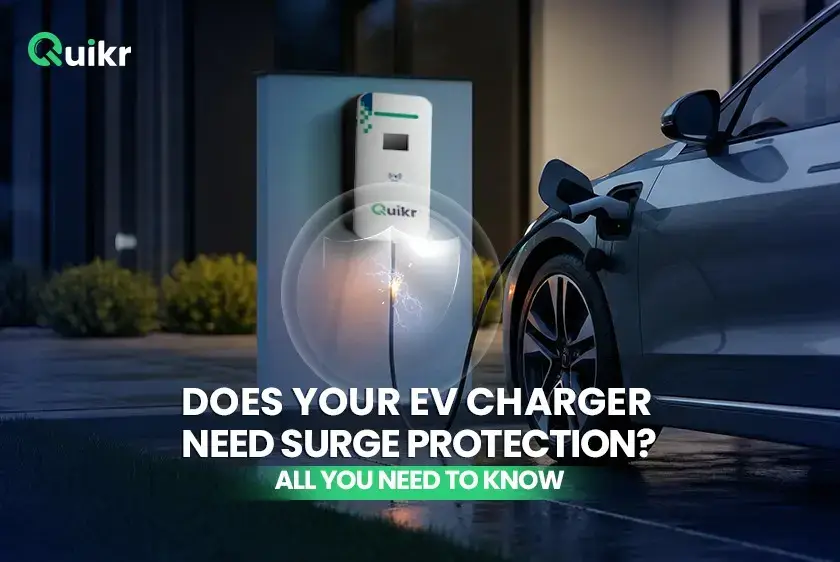
A surge protector, also known as a Surge Protection Device (SPD), is a safety device designed to protect electrical equipment from sudden increases in voltage. Its main purpose is to prevent damage caused by power surges by diverting excess electrical energy safely to ground before it reaches connected devices. In doing so, a surge protector helps protect against component burnout, control board failure, data loss, and premature equipment breakdown issues that are especially critical for systems that rely on sensitive electronics.
Voltage fluctuations occur more often than many people realize, and they are not limited to extreme weather. Lightning strikes, whether direct or nearby, can induce powerful voltage surges through power lines, affecting both outdoor and indoor charging stations. Utility grid activities, such as power switching, short outages, or temporary malfunctions, frequently cause a voltage drop followed by a sudden surge when power is restored. Transformer failures can inject heavy, uncontrolled surges into the electrical network, while inverters used with solar panels or battery backup systems may create over-voltage conditions during rapid load changes or improper regulation.
EV chargers and electric vehicles are particularly vulnerable to these fluctuations. EV chargers contain sophisticated power electronics, communication modules, and safety controls that are highly sensitive to voltage spikes, making the charger itself the first and most commonly affected component during a surge event. While electric vehicles include internal protection systems, repeated or severe surges during charging can also stress the vehicle’s onboard charger and battery management system, leading to charging faults, reduced efficiency, or costly electronic repairs. This makes surge protection a vital safeguard for both the EV charger and the vehicle it serves.
Does a surge protector genuinely protect anything important, or is it simply an unnecessary add-on? Is surge protection actually required by law in the UAE, or is it merely a recommendation? Let’s dive into the details.
Is Surge Protection Needed for an EV Charger?
Surge protection is important for EV chargers, but not indispensable. In fact, EV charging systems are often more vulnerable to power surges than many other household or commercial electrical devices.
The reason lies in how EV chargers are built. Unlike simple appliances, EV chargers rely on advanced power electronics, control boards, communication modules, and safety systems that constantly exchange data with the vehicle. These components are extremely sensitive to voltage spikes. Even a short, momentary surge lasting milliseconds can damage internal circuitry without triggering a visible failure right away.
Location also matters. Most EV chargers are installed outdoors or in semi-exposed areas, such as parking lots, villas, basements, or open carports. This makes them more susceptible to:
- Lightning-related surges during thunderstorms
- Grid instability caused by switching operations or short outages
- Voltage irregularities from nearby transformers or backup power systems
A properly installed Surge Protection Device (SPD) acts as a protective barrier, diverting excess voltage away from the charger before it reaches sensitive electronics. This helps prevent:
- Control board failure
- Communication errors between the charger and the EV
- Repeated fault trips and charging interruptions
- Complete charger breakdown requiring replacement
From a cost perspective, the logic is straightforward. Repairing or replacing a damaged EV charger is significantly more expensive than installing an SPD. While surge protection does add to the initial installation cost, it is minimal compared to the price of a new charger, labor, downtime, and potential vehicle diagnostics.
Although modern EVs and chargers do include internal fail-safes, no system is fully immune to severe or repeated surges. In rare cases, a surge occurring during active charging can also affect the vehicle’s onboard charger or battery management electronics. The risk may be low, but the financial impact is high. In this context, surge protection is best seen as preventive insurance, offering long-term reliability and peace of mind. But is Surge Protection required by law?
From a regulatory standpoint, in the United Arab Emirates, surge protection is not universally mandated by law for every EV charger installation. However, local authorities, utility providers, and engineering consultants strongly recommend SPDs as part of best practice, especially for outdoor chargers, commercial projects, and sites using solar or backup power systems. Many DEWA- and ADDC-aligned specifications include surge protection as part of approved electrical design standards, even if it is not explicitly stated as a blanket legal requirement.
In other words, while surge protection may not always be legally compulsory in the UAE, it is widely recognized as a professional, safety-driven installation requirement, particularly in a region where high temperatures, grid load variations, and exposed installations are common.
Benefits of Surge Protection for EV Chargers
Installing a surge protection device for your EV charger is not just about meeting technical recommendations; it’s about ensuring long-term reliability, safety, and peace of mind. EV chargers operate at the intersection of high power and sensitive electronics, making them particularly exposed to electrical instability. A properly selected surge protector acts as a silent guardian, working in the background to keep both your charger and vehicle safe from unexpected voltage events.
Key benefits of using a surge protector with an EV charger include:
- Protection of sensitive electronics: Surge protector safeguards control boards, communication modules, and power converters inside the charger from sudden voltage spikes.
- Extended lifespan of the EV charger: Surge protector prevents cumulative electrical stress that can lead to premature component failure and costly replacements, thus extending the lifespan of the EV charger.
- Reduced risk of vehicle damage: Surge protection adds an extra layer of defense for the EV’s onboard charger and battery management system during active charging.
- Improved charging reliability: Surge protectors minimize unexplained faults, error messages, and interrupted charging sessions caused by power irregularities.
- Lower maintenance and repair costs: The cost of an SPD is significantly lower than repairing or replacing a surge-damaged charger or vehicle component.
- Enhanced safety for users and property: Surge protectors reduce the risk of electrical failures that could lead to overheating, short circuits, or system shutdowns.
- Safety in exposed environments: Surge protection is especially valuable for outdoor installations, commercial sites, and locations prone to lightning, grid switching, or solar inverter fluctuations.
Does Using a Surge Protector Affect My EV Charger Warranty?
In most cases, using a surge protector does not negatively affect your EV charger warranty, and in many situations, it actually helps protect it.
Further, some manufacturers and installers recommend or specify surge protection in their installation manuals, particularly for outdoor chargers or locations with known grid instability. In these cases, the absence of surge protection could potentially work against a warranty claim if surge-related damage occurs.
EV charger manufacturers design their products to operate within defined electrical limits. Damage caused by external electrical events, such as lightning strikes, grid surges, or unstable power supply, is commonly listed as an exclusion in warranty terms. This means that if a charger is damaged due to a voltage surge, the repair or replacement may not be covered under warranty, even if the charger itself is still within the warranty period.
Installing a properly rated Surge Protection Device (SPD) helps prevent exactly this type of non-warranty damage. By limiting excessive voltage before it reaches the charger, surge protection reduces the likelihood of failures that manufacturers classify as “external electrical faults.”
That said, keep in mind to use a certified SPD that meets relevant electrical standards (such as IEC or equivalent local codes), ensure professional installation, following the charger manufacturer’s installation guidelines and local electrical regulations, and avoid unauthorized modifications to the charger itself. Surge protection should be installed within the electrical circuit, not by altering the charger’s internal components.
Types of Surge Protectors for EV Chargers in the UAE
Not all surge protectors provide the same level of protection for EV chargers. In the UAE, selecting the correct type of surge protection device (SPD) is important due to different installation environments. The main types of surge protectors used for EV chargers include:
1. Whole-Home or Main Distribution Board SPDs (Type 1 & Type 2)
These surge protectors are installed at the main electrical panel or distribution board and provide the first and most critical line of defense.
- Type 1 SPD: Designed to handle high-energy surges, such as those caused by direct or nearby lightning strikes. Type 1 devices are typically installed at the service entrance, especially in buildings with external exposure, rooftop solar systems, or lightning protection systems.
- Type 2 SPD: Protects against indirect surges and switching events generated by the utility grid, transformers, or internal electrical loads. Type 2 SPDs are the most commonly used option in residential and commercial EV charger installations.
A Type 1 or Type 2 SPD ensures that voltage surges are limited before they reach any branch circuit, including the EV charger line. This type of protection covers the charger, other household appliances, and sensitive electronics simultaneously.
In the UAE, whole-home SPDs are widely regarded as best practice, particularly for villas, commercial properties, and sites using solar inverters or backup power systems.
2. EV Charger–Dedicated SPDs (Type 2 or Type 3 at Sub-Board Level)
These SPDs are installed on the specific circuit feeding the EV charger, either at a sub-distribution board or inside a dedicated EV charging panel. They are designed to handle medium to low energy surges that may pass through the main panel surge protection device (SPD), providing localized protection for the EV charger’s sensitive power electronics and communication systems. These devices are often used in combination with a whole-home SPD to create a layered surge protection strategy, ensuring enhanced reliability and long-term protection of the charging equipment.
EV chargers draw high current and operate continuously for long periods. A device-specific SPD reduces the residual surge voltage that could still damage control boards, even after primary protection at the main panel.
3. Point-of-Use SPDs (Type 3)
Type 3 SPDs are installed close to the device itself, sometimes inside the charger enclosure or immediately upstream. This type of SPDs is suitable for low-energy transient surges but is not designed to stop large lightning-induced surges on its own. Therefore, it must always be used in conjunction with Type 1 or Type 2 SPDs to ensure effective and comprehensive surge protection.
Important clarification:
Point-of-use protection alone is not sufficient for EV chargers in the UAE. While it adds a final safety layer, it cannot replace upstream surge protection at the distribution board.
4. Built-In Surge Protection Inside EV Chargers
Some premium EV chargers include internal surge protection components, such as basic transient voltage suppressors.
Key limitation:
Built-in protection should be viewed as supplementary, not a replacement for external surge protection—especially for outdoor chargers or regions with grid instability.
Surge Protection for AC vs. DC EV Chargers
Surge protection requirements vary depending on the charger type, primarily due to differences in system architecture and operating voltage.
AC EV Chargers
AC chargers are typically installed in residential and light commercial environments. While operating at lower voltages, they remain exposed to transient overvoltage events originating from the grid or environmental factors.
Recommended configuration:
- Type 2 SPD at the main or sub-distribution board
- Optional Type 3 SPD near the charger for localized protection
The protection strategy focuses on controlling surges on the AC supply line before they reach the charger.
DC Fast Chargers
DC fast chargers operate at significantly higher voltages and incorporate complex internal power conversion systems. This increases both their exposure and sensitivity to surge events.
Recommended configuration:
- Type 1 and Type 2 SPDs on the AC input side
- DC-rated SPDs on the DC output side
Protection must be applied on both AC and DC sections of the system to ensure full coverage.
How to Choose the Right Surge Protector for Your EV Charger
Choosing the right surge protector for your EV charger is not about selecting a generic SPD; it involves matching the protection level to the charging method, installation type, and system power rating. International standards such as IEC 61851-1 define EV charging modes, each with different surge protection requirements.
The first step is to identify your EV charging mode. EV charging systems fall into four main categories of modes, and understanding which one applies determines where surge protection should be installed and what type is required.
Mode 1: Standard AC Socket Charging (Basic Household Outlet)
In this mode, the EV charges directly from a standard single-phase AC socket without advanced communication or protection.
Surge protection considerations:
- Limited internal protection
- Highly dependent on the building’s electrical safety
- Vulnerable to grid fluctuations and lightning-induced surges
Recommended SPD setup:
- Type 2 SPD at the main distribution board
- Additional protection if the socket is outdoors or in an exposed location
This mode offers the least control and is increasingly discouraged for long-term EV charging due to safety limitations.
Mode 2: AC Socket with ICCPD (In-Cable Control and Protection Device)
Mode 2 adds an ICCPD within the charging cable, providing basic safety and control functions.
Surge protection considerations:
- ICCPD offers limited protection, mainly for current and temperature
- Does not replace proper surge protection at the electrical panel
Recommended SPD setup:
- Type 2 SPD at the main or sub-distribution board
- Optional Type 3 SPD for additional local protection
Surge protection remains essential because the ICCPD is not designed to handle high-energy voltage surges.
Mode 3: Permanently Installed AC Charging Station (Wall-Mounted or Standalone)
This is the most common setup for home wallboxes, workplaces, and commercial AC chargers, typically rated above 4.6 kVA and often connected to a three-phase supply.
Surge protection considerations:
- Advanced electronics and communication systems
- Continuous high-current operation
- Often installed outdoors or in semi-exposed locations
Recommended SPD setup:
- Type 2 SPD at the main distribution board
- Dedicated Type 2 or Type 3 SPD at the EV charger sub-board
- Coordination with RCDs and circuit breakers for full compliance
This setup provides layered protection, significantly reducing the risk of charger failure and downtime.
Mode 4: DC Fast Charging (Public & High-Power Stations)
Mode 4 covers DC fast chargers, where AC power is converted to DC inside the charging station and delivered directly to the vehicle battery. Power levels typically start from 24 kW and can exceed 350 kW.
Surge protection considerations:
- High-voltage AC input and high-voltage DC output
- Extremely sensitive power electronics
- Higher financial and operational risk if damaged
Recommended SPD setup:
- Type 1 and Type 2 SPDs on the AC input side
- DC-rated SPDs on the DC output side
- Coordinated, multi-stage surge protection system
This is the most demanding charging mode and requires professional electrical design to meet safety, reliability, and compliance expectations.
Key Technical Factors to Consider When Choosing an SPD
Regardless of charging mode, always evaluate the following:
- SPD Type (Type 1, 2, or 3) based on installation point and exposure
- Voltage rating compatible with single-phase or three-phase systems
- Surge current capacity (kA rating) appropriate for the site risk level
- Compliance with IEC standards and local electrical regulations
- Coordination with existing protection devices (RCDs, MCBs, MCCBs)
Key Features to Look for in a Surge Protector
Not all surge protectors provide the same level of protection, especially for EV charging systems. Because EV chargers involve high power and sensitive electronics, selecting the correct specifications is essential.
The key features to evaluate when choosing a surge protector include:
- Energy Absorption Capacity (Joule Rating): The joule rating indicates how much surge energy the device can safely absorb before it fails. For EV chargers, a high joule rating is critical due to repeated exposure to grid switching and environmental surges. As a baseline, a surge protector with at least 2,000 joules is recommended, while higher-rated systems are preferable for outdoor, commercial, or high-power installations.
- Clamping Voltage (Protection Level): Clamping voltage defines the point at which the surge protector activates and starts diverting excess voltage. Lower clamping voltage means better protection, as the surge is limited earlier. For EV charging applications, a clamping voltage of around 400V is generally considered optimal, balancing protection effectiveness with system compatibility.
- Response Time: Electrical surges occur extremely fast often in fractions of a nanosecond. A high-quality surge protector must respond almost instantly to be effective. Look for devices with a response time of less than one nanosecond, ensuring voltage spikes are suppressed before they reach sensitive charger electronics.
- Certification and Compliance (UL / IEC Standards): Certification is not optional for EV charging infrastructure. Always select a surge protector that is UL listed or compliant with relevant IEC standards, as this confirms the device has been tested for safety, performance, and reliability under real-world conditions. Certified devices also support regulatory acceptance and professional installation requirements.
Where Is Surge Protection Installed in EV Chargers?
Surge protection for EV charging systems is most effective when it is strategically placed at key points along the electrical supply path, rather than relying solely on protection inside the charger itself. The goal is to intercept harmful voltage events as early as possible before they travel downstream and damage charging equipment or connected vehicles.
The primary and most important installation point is the power distribution panel that feeds the EV charger. This is where surges from lightning strikes, utility switching, transformer faults, or grid disturbances first enter the electrical system. Installing a properly rated SPD at this level protects not only the charger, but all downstream equipment connected to that supply. If surge protection were left only inside the charger, a major surge could still destroy the unit requiring full replacement rather than a simple SPD service action.
In larger or higher-risk installations, additional surge protection may also be installed closer to the charger, such as in a sub-distribution board or dedicated EV charging cabinet. This secondary layer helps reduce residual voltage that may pass through the main panel, offering more precise protection for the charger’s sensitive electronics especially in outdoor or high-exposure environments.
Another critical but often overlooked factor is grounding and bonding. At sites with unbonded or poorly coordinated ground systems, lightning can cause a phenomenon known as ground potential rise, where different parts of the system momentarily sit at different electrical potentials. This can force energy through power and communication lines in an attempt to equalize, leading to equipment damage. In such cases, surge protection may be required at both ends of power and signal lines to properly control energy flow.
In summary, surge protection in EV charging systems is typically installed:
- At the main power distribution panel (primary protection)
- At a sub-panel or EV charging cabinet (secondary, localized protection)
- In coordination with proper grounding and bonding systems
When correctly placed and properly rated for the system voltage, surge protection becomes a site-wide safeguard protecting the charger, the vehicle, and the electrical infrastructure as a whole.
How to Install a Surge Protector for an EV Charger in the UAE
Installing a surge protector for an EV charger is a technical electrical task that must be done correctly to ensure safety, effectiveness, and compliance with UAE regulations. While the concept may seem simple, proper installation depends on the charger type, power rating, and installation environment.
Below is a step-by-step guide on how surge protection should be installed:
- Site assessment and load evaluation: A qualified electrician first evaluates the electrical supply, earthing system, charger rating (single-phase or three-phase), and exposure level (indoor vs. outdoor). This determines the correct SPD type, voltage rating, and surge capacity.
- Selection of the correct SPD: The surge protector must match the system voltage (e.g. 230V single-phase or 400/415V three-phase), charging mode, and risk level. In the UAE, certified SPDs compliant with IEC / UL standards are typically required.
- Installation at the distribution board: The SPD is installed inside the main distribution board or EV charger sub-panel, connected in parallel to the supply. It does not carry load current but activates only when a surge occurs.
- Connection to proper earthing: Correct grounding is critical. The SPD must be bonded to a low-resistance earth connection to safely divert excess voltage. Poor earthing significantly reduces surge protection effectiveness.
- Coordination with breakers and RCDs: The surge protector is coordinated with existing MCBs, MCCBs, and RCDs to ensure safe operation and isolation if the SPD reaches end-of-life.
- Testing and commissioning: After installation, the system is tested to confirm correct wiring, earthing continuity, and SPD status indicators. Only then is the EV charger put back into operation.
Can Surge Protection Be Installed on Indoor EV Chargers?
Yes. Indoor EV chargers installed in garages, basements, or parking structures still require surge protection because electrical surges commonly originate from utility switching, transformer activity, power restoration, and building distribution systems—not just lightning strikes. While outdoor chargers face higher environmental and lightning exposure and may require higher-capacity surge protective devices (SPDs), indoor chargers remain vulnerable to grid-related surges and inverter-induced overvoltage, making surge protection necessary for both indoor and outdoor installations.
Can I Install a Surge Protector Myself?
In the UAE, DIY installation is strongly discouraged and often not permitted. EV chargers are high-power electrical systems, and improper SPD installation can:
- Void charger warranties
- Reduce surge protection effectiveness
- Create fire or safety risks
- Violate local electrical codes and authority requirements
Surge protectors must be installed by a licensed electrician familiar with UAE electrical standards and utility authority guidelines (such as DEWA or ADDC).
How Much Is Surge Protector Installation for EV chargers in the UAE?
In the UAE, the cost of installing surge protection for an EV charger depends on the type of SPD, installation complexity, and whether electrical upgrades are needed. Surge protectors typically range from a few hundred to around AED 1,800+, depending on capacity and quality, while professional installation usually adds several hundred up to about AED 1,000. Factors such as charger location, panel condition, and grounding work can affect the final price. Overall, the total cost is relatively modest compared to the high expense of repairing or replacing surge-damaged EV chargers or vehicle electronics, making surge protection a smart and cost-effective investment.
Advice for Installing an EV Charger Surge Protector
Installing surge protection for an EV charger is most effective when it’s planned thoughtfully and executed by professionals. A few strategic decisions during installation can significantly improve safety, performance, and long-term reliability. Key tips to keep in mind:
- Use layered protection where possible: For outdoor or high-exposure installations, best practice is to install an SPD at the main electrical panel and an additional SPD on the circuit feeding the EV charger. This approach can also be applied in residential settings for stronger protection.
- Install surge protection during panel upgrades: EV chargers often require upgrading the electrical panel. This is the ideal time to add surge protection, as retrofitting later is usually more complex and costly.
- Choose the right SPD type for the application: Whole-panel protection typically requires a Type 1 or Type 2 SPD, while charger-level protection may use a coordinated secondary device. A certified installer can determine the most suitable configuration.
- Ensure full code and standard compliance: Surge protection should comply with recognized electrical standards and local regulations. Working with a certified installer helps ensure the installation meets current safety and compliance requirements.
- Avoid DIY installation: EV chargers and SPDs involve high-voltage electrical systems. Without proper training and experience, DIY installation poses serious safety risks and can lead to improper protection or equipment damage.
- Work with an EV-experienced electrical contractor: Always rely on a licensed, certified electrician, preferably one with experience in EV charger installations, to ensure correct SPD selection, installation, and coordination with the rest of your electrical system.
Following these guidelines helps ensure your EV charger surge protection is not only installed correctly, but also delivers reliable, long-term protection for both your charger and your vehicle.
Do EV Chargers Need to Be GFCI Protected?
Yes, EV chargers generally require GFCI (Ground Fault Circuit Interrupter) protection to ensure user safety and reduce the risk of electric shock. Because EV charging involves high current and is often performed outdoors or in damp environments, GFCI protection is critical for detecting ground faults and instantly disconnecting power. Many modern EV chargers have built-in GFCI or equivalent ground-fault protection, but local electrical codes may still require additional upstream protection at the panel level. Always verify requirements with a certified installer to ensure full compliance and proper coordination between GFCI devices and surge protection systems.
Do EV Chargers Need to Be RCD Protected?
Yes, EV chargers do require RCD (Residual Current Device) protection, as it is essential for preventing electric shock and ensuring safe operation. EV charging systems can generate both AC and DC residual currents, which means the correct RCD type is critical, typically Type A with DC detection or Type B, depending on the charger design. Many modern EV chargers include built-in DC leakage detection, but external RCD protection may still be required by local regulations. To avoid nuisance tripping and ensure compliance, RCD selection and installation should always be handled by a qualified electrician familiar with EV charging standards.
Does a Surge Protector Wear Out With Use, and Does It Need Maintenance?
Yes, surge protectors do wear out over time. Each surge event slightly degrades the internal protective components, even if no visible damage occurs. While most modern SPDs require minimal maintenance, they should be periodically inspected, especially their status indicators, to confirm they are still operational. Once a surge protector reaches the end of its service life, it must be replaced promptly to ensure continued protection for your EV charger.
Final Words
Surge protection is not an optional add-on for EV charging, it’s a core safety and reliability requirement. From protecting sensitive charger electronics and your EV’s onboard systems, to reducing downtime, repair costs, and long-term risk, the right surge protection strategy ensures your charging setup is built to last. Whether you’re installing a home wall charger or managing a high-power commercial station, proper surge protection makes the difference between a resilient system and an expensive failure.
At Quikr, we don’t just supply EV charging solutions, we help you install them the right way. From certified EV chargers to professionally specified surge protection, grounding, and safety compliance, our experts ensure your setup meets real-world conditions and local standards.
Talk to Quikr today for expert guidance on EV chargers, surge protection solutions, and end-to-end installation support tailored to your needs.




13 Comments
[…] surge protection is typically an essential part of a professional EV charger installation to safeguard your vehicle, […]
cenforce 100 tablet
cenforce 100 tablet
tab finpecia 1mg
tab finpecia 1mg
semaglutid tablett reseptfritt
semaglutid tablett reseptfritt
viagra restaurant
viagra restaurant
how many sildenafil can you take at once
how many sildenafil can you take at once
acyclovir tablet during pregnancy
acyclovir tablet during pregnancy
saxenda cost cvs
saxenda cost cvs
minoxidil treatment basics
minoxidil treatment basics
vardenafil 20 mg profile
vardenafil 20 mg profile
bronchitis antibiotic overview
bronchitis antibiotic overview
penicillin allergy symptom guide
penicillin allergy symptom guide
Indian tadalafil trade names
Indian tadalafil trade names