
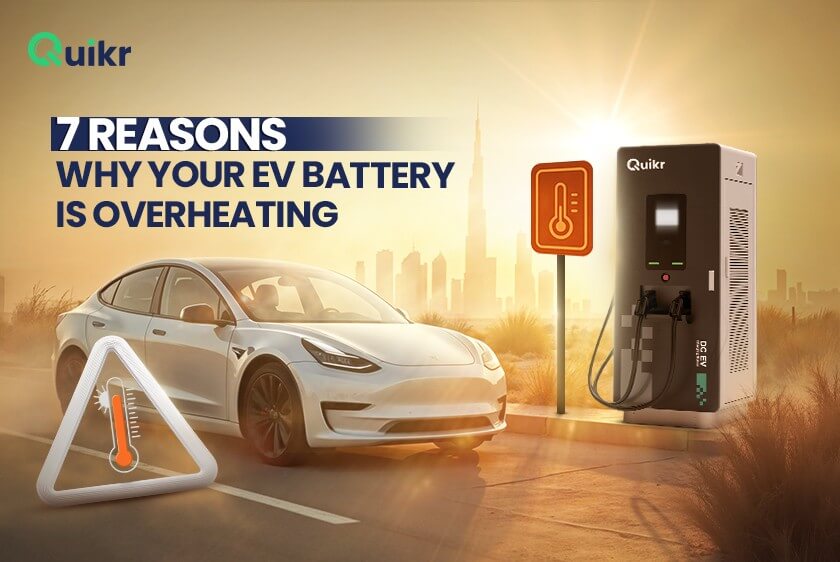
With summer temperatures often crossing 45°C, EV drivers in Dubai, Abu Dhabi, Sharjah, and beyond are increasingly encountering battery heat warnings, slower charging, and reduced performance. The UAE’s blistering climate isn’t just hard on people, it’s also tough on machines, especially the lithium-ion batteries that power electric vehicles.
Modern EVs are designed to handle heat, but in hyper-arid environments like ours, battery packs need extra care. Excessive heat can accelerate degradation, limit range, and, over time, reduce the battery’s ability to hold a full charge. In rare cases, heat can even trigger safety shutdowns or emergency cooling procedures.
But don’t worry, the good news is, you can prevent most of these issues by understanding what causes battery overheating and taking a few simple steps to avoid it.
Book a battery check with Quikr mobile diagnostics team. We’ll come to your location and scan your EV battery in under 30 minutes.
1. Scorching Outdoor Temperatures & Parking in Direct Sun
The Problem:
Leaving your EV parked outdoors in the midday sun, especially in areas like JLT, Downtown, or Al Reem Island can dramatically raise internal battery temperatures. Even when the vehicle is off, the battery pack continues to absorb radiant and ambient heat, sometimes reaching critical temperatures over 60°C.
Prolonged exposure to these conditions can cause:
- Reduced charging efficiency
- Activation of battery cooling systems (draining energy)
- Long-term chemical wear inside the cells
The Fix:
- Park in shaded areas, underground garages, or under solar canopies.
- Use windshield reflectors, side window shades, and thermal car covers to block heat buildup.
- When building a new villa or parking extension, consider adding a UV-reflective roof or shade sail to reduce heat soak.
Pro Tip: Some EVs allow you to set a scheduled cabin vent or “keep the cabin cool” feature activated when parking in the sun.
2. Frequent DC Fast Charging at Public Stations
The Problem:
DC fast chargers are ideal for road trips or emergencies, but frequent use especially at midday can strain your battery. Fast chargers like those at Masdar City, ADNOC Oasis, or DEWA hubs deliver high currents, which causes internal resistance heating. Combined with ambient heat, this leads to:
- Reduced charge speed as the system tries to protect itself
- Sudden cooldown interruptions
- Long-term degradation in battery life
The Fix:
- Use AC Level 2 chargers for your day-to-day needs.
- Charge during off-peak hours (after 9 PM or before 8 AM).
- If using public DC chargers, look for covered or indoor stations and monitor your battery temperature through your app.
Pro Tip: With Quikr ’s home chargers, you can schedule overnight charging during the cooler hours improving battery life and lowering DEWA bills.
Explore : DC fast charger price guide in UAE !
3. Fast Driving on Desert Roads or Sheikh Zayed Highway
The Problem:
Driving at high speeds or accelerating hard, especially in summer increases the current draw from the battery, which means more heat is generated internally. Combine that with blazing road temps (up to 65°C near the tarmac!) and you get a recipe for overheating.
This can lead to:
- Throttled performance
- Battery cooling system overuse
- Reduced overall range
The Fix:
- Use Eco or Comfort mode during the hottest parts of the day.
- Avoid peak hours (12 PM – 4 PM) for long-distance travel.
- Plan weekend drives to Hatta or Fujairah for early morning or evening when the roads and battery are cooler.
Pro Tip: Just like your phone drains faster when used under the sun, EV batteries lose efficiency during extreme driving in desert heat.
4. Charging Immediately After Long Summer Drives
The Problem:
Let’s say you’ve driven from Abu Dhabi to Dubai in traffic with the AC blasting. Your EV battery is already hot. If you plug it in immediately after arriving home, you’re stacking thermal stress on thermal stress and your EV won’t like it.
Symptoms include:
- Delayed charging
- Reduced charging speeds
- Increased wear on cooling components
The Fix:
- Let the vehicle rest in a shaded area or basement parking for 30–60 minutes.
- Check battery temperature via your EV’s app (many show real-time data).
- Some models allow scheduled delayed charging use this to wait until the battery cools before the current flows in.
Pro Tip: Some Tesla, BMW, and Hyundai models automatically cool the battery before charging if you enable “preconditioning” in your settings.
Figure out : how to charge ev battery with laptop charger ?
5. Blocked Air Vents & Dust from Desert Environments
The Problem:
We love the desert lifestyle — but your EV doesn’t. Dust, sand, and fine particles can clog the vents and filters responsible for both cabin and battery cooling. Over time, this restricts airflow and reduces the efficiency of the car’s thermal management system.
You may notice:
- Fan noises running longer than usual
- The cabin feels hotter despite AC use
- Thermal alerts or charging cutoffs in the app
The Fix:
- Inspect and clean air intake vents regularly, especially after sandstorms.
- Replace cabin and battery air filters every 3–6 months.
- Book quarterly service with Quikr EV, including a cooling system inspection and airflow optimization.
Pro Tip: If your EV has a “service mode” for air circulation, run it after dusty drives to keep internal ducts clean.
6. Older EV Models Without Advanced Cooling Systems
The Problem:
Some older or entry-level EVs sold in the UAE (like Renault Zoe, MG ZS EV, or early BYD models) come with air-cooled batteries, which rely on ambient airflow. In the UAE’s climate, where the “ambient” air is often 45°C+, this system becomes ineffective quickly.
Results may include:
- Slower charging in summer
- Rapid SoH decline over 2–3 years
- Sudden thermal cutoffs on long trips
The Fix:
- Avoid charging in direct sun — especially at public stations.
- Check your car manual or dealer documents to see if liquid cooling is present.
- If air-cooled, make cooler driving times and shaded charging areas a strict part of your routine.
Pro Tip: If you’re shopping for a used EV in the UAE, always ask about battery cooling specs. It’s more important than the range in this region.
Choose between : best commercial ev charging stations !
7. Battery Degradation from Constant High Heat Exposure
The Problem:
Heat ages batteries faster — it’s that simple. If your EV spends most of its life parked outdoors, charging at noon, and driving aggressively, your battery’s State of Health (SoH) will drop quickly. Over time, this leads to:
- Shorter driving range
- Limited peak charging speeds
- “Battery needs service” warnings
The Fix:
- Monitor your battery SoH through the app or during service.
- Schedule a thermal scan with Quikr to check battery chemistry and cell balance.
- Follow smart usage: charge at night, avoid full charges in summer and rest after driving.
Pro Tip: Keeping your EV between 20–80% charge, especially during summer, helps prolong battery life.
Bonus: 5 Ways to Cool Down Your EV Battery Quickly in the UAE
- Park underground or in basement lots to help passive cooling.
- Use DEWA off-peak hours (9 PM–7 AM) to charge when it’s cooler and more affordable.
- Enable battery preconditioning or cooldown if your EV supports it.
- Turning off AC and cabin systems during charging it reduces total system load.
- Pause a DC fast charge if the battery gets too warm and resume with Level 2 after a cooldown break.
FAQs for UAE EV Drivers
What’s the best time to charge my EV in the UAE?
After 9 PM or before 7 AM temperatures are lower, and utility rates are cheaper.
Can EVs overheat just by being parked in the sun?
Yes. Prolonged sun exposure heats up the battery pack, especially in black-colored EVs, even if they’re idle.
Is it bad to fast charge every day in summer?
Yes. It adds strain to the battery, especially if the battery starts hot. Limit DC charging to occasional use.
Do EVs in the UAE come with cooling systems?
Most mid- and high-end models (Tesla, BMW, Hyundai Ioniq), but some affordable models rely on air cooling. Check your specs.
Stay Cool & Safe — Get a UAE-Focused EV Battery Health Check
Battery health isn’t something you want to leave to guesswork especially when summer temperatures can do lasting damage. Taking preventive steps today can save you thousands in repair or replacement down the line.
At Quikr, we specialize in UAE climate-specific EV care. Our mobile diagnostics team will:
- Run a full thermal scan of your battery
- Analyze SoH, cell balance, and cooling efficiency
- Provide you with a clear report and optimization plan
We come to your home or office
Takes under 30 minutes
No dealership hassle
Book your EV battery check with Quikr today and protect your ride all summer long.
You should read : UAE Regulations for Electric Vehicles !