
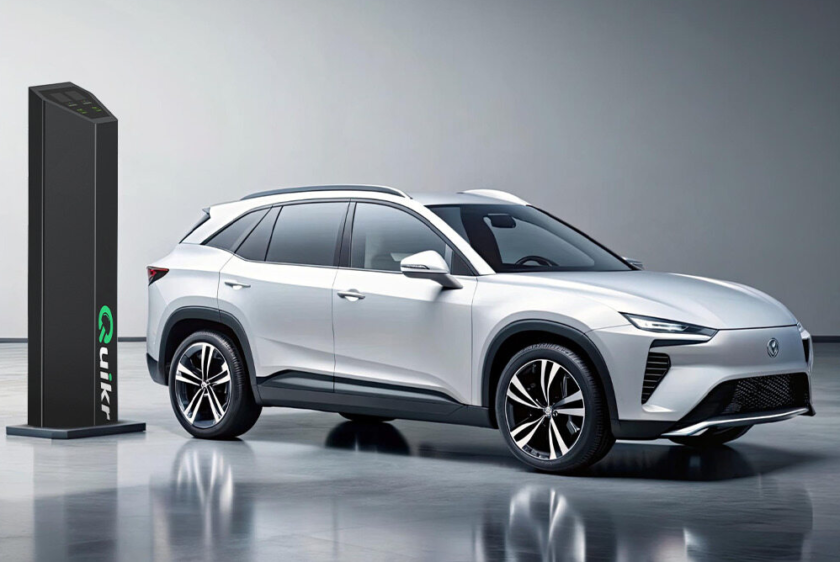
Wireless electric vehicle (EV) charging is an emerging technology that allows cars to recharge their batteries without the need for physical cables. Instead of plugging in, energy is transferred through electromagnetic fields between a charging pad on the ground and a receiver installed in the vehicle. This “plug-free” approach simplifies the charging experience, making it more convenient and user-friendly, especially in everyday settings like homes, parking lots, and public spaces.
The concept is gaining attention as the global shift toward electric mobility accelerates. As EV adoption grows, so does the need for smarter, more seamless charging solutions. Wireless charging addresses some of the common pain points associated with traditional charging—such as handling cables, wear and tear on connectors, and limited accessibility—while also opening the door to future innovations like dynamic charging, where vehicles can charge while in motion.
In the UAE, wireless EV charging is particularly relevant due to the country’s rapid push toward sustainability and smart city development. Cities like Dubai and Abu Dhabi are actively investing in clean transportation infrastructure as part of broader initiatives to reduce carbon emissions and diversify energy sources. With a rising number of EV users and a strong focus on integrating advanced technologies into urban planning, wireless charging aligns well with the UAE’s vision of a connected, efficient, and environmentally conscious future.
What is Wireless EV Charging?
Wireless EV charging is a method of recharging electric vehicles without the need for physical cables or plug-in connections. Instead, it uses electromagnetic fields to transfer energy from a charging pad installed on the ground to a receiver fitted underneath the vehicle. When the car is positioned correctly over the pad, charging begins automatically, requiring little to no input from the driver. This cable-free approach simplifies the entire process, making it more convenient and reducing the need to handle connectors or worry about wear and tear. At its core, the key idea behind wireless charging is seamless, automatic energy transfer—allowing EVs to charge effortlessly in a way that fits naturally into everyday routines.
How Wireless EV Charging Works
Wireless EV charging is based on a principle called magnetic induction, where energy is transferred between two coils through an electromagnetic field. One coil is embedded in a charging pad connected to the power source, while the other is installed underneath the vehicle. When alternating current flows through the ground coil, it generates a magnetic field that induces an electric current in the vehicle’s coil—allowing power to be transferred without any physical connection.
The overall power transfer process is designed to be seamless and automatic. Once the vehicle is correctly aligned over the charging pad, the system detects its presence and begins transferring energy. The efficiency of this process depends on factors such as coil alignment, distance between the coils, and system design, but ongoing technological advancements are helping improve performance and reliability.
The charging flow typically follows these steps:
- Grid supply: Electricity is delivered from the power grid to the ground charging unit
- Power conversion: The system converts electricity into a form suitable for generating a magnetic field
- Transmission: The magnetic field transfers energy wirelessly to the vehicle’s receiver coil
- Reception: The vehicle converts the received energy back into usable electrical power
- Battery charging: The electricity is directed to the EV battery for charging
This structured flow, from the grid to the vehicle, enables a smooth, hands-free charging experience while maintaining safety and efficiency.
Components of a Wireless EV Charging System
A wireless EV charging system is made up of several integrated components that work together to enable safe, efficient, and seamless energy transfer without physical connections. While the concept may appear simple on the surface, the underlying system involves precise coordination between hardware and software to ensure optimal performance, alignment, and power delivery.
- Ground Charging Pad: This is the primary transmitter unit installed on or beneath the ground surface. It contains a coil that generates an electromagnetic field when powered. The pad is typically weatherproof and designed to withstand environmental conditions, making it suitable for residential, commercial, and public installations.
- Vehicle Receiver Pad: Mounted underneath the electric vehicle, this component acts as the receiving unit. It contains a secondary coil that captures the electromagnetic energy generated by the ground pad and converts it back into electrical energy to charge the battery.
- Power Control Unit: This unit manages the flow of electricity between the grid and the charging pad. It handles tasks such as converting power into the correct frequency, regulating voltage, ensuring system efficiency, and maintaining safety standards throughout the charging process.
- Alignment & Communication System: For wireless charging to work efficiently, the vehicle must be properly aligned with the ground pad. This system uses sensors, guidance technology, and communication protocols to help position the vehicle correctly and establish a secure connection between the car and the charging infrastructure. It also enables real-time data exchange for monitoring charging status, safety checks, and system optimization.
Types of Wireless EV Charging
Wireless EV charging technologies can be categorized based on how and when energy is transferred to the vehicle, as well as the underlying method used for power transfer. Understanding these types helps highlight the flexibility of wireless charging—from stationary solutions used in homes and parking spaces to advanced systems designed for charging vehicles in motion.
Static Wireless Charging (Park & Charge)
Static wireless charging is the most common and currently available form of wireless EV charging. In this setup, the vehicle remains stationary—typically parked in a garage, driveway, or designated charging space—while energy is transferred from the ground pad to the vehicle. Once the car is properly aligned over the charging pad, the process begins automatically. This method is ideal for residential and commercial use due to its simplicity, reliability, and compatibility with existing parking infrastructure.
Dynamic Wireless Charging (Charging While Driving)
Dynamic wireless charging represents a more advanced and future-focused approach, where vehicles can charge while in motion. Charging coils are embedded within roadways, allowing EVs to receive power continuously as they drive over them. This technology has the potential to significantly extend driving range and reduce reliance on large batteries. Although still in pilot and development stages, dynamic charging aligns with smart city concepts and could transform how EV infrastructure is designed, particularly in regions investing heavily in innovation.
Inductive vs Resonant vs Capacitive Charging
Wireless charging systems can also be differentiated by the technology used to transfer energy:
- Inductive Charging: The most widely used method, based on magnetic induction between closely aligned coils. It is efficient at short distances and commonly used in current wireless EV charging systems.
- Resonant Charging: An extension of inductive charging that uses resonant circuits to allow energy transfer over slightly greater distances and with more flexibility in alignment. This improves convenience but may involve more complex system design.
- Capacitive Charging: Instead of magnetic fields, this method uses electric fields between conductive plates to transfer energy. While it offers potential advantages in certain scenarios, it is less commonly used in EV applications due to current technical limitations and lower efficiency compared to inductive systems.
Wireless vs Plug-In EV Charging
Wireless and plug-in EV charging both serve the same purpose—recharging electric vehicle batteries—but they differ significantly in how they deliver energy and in the overall user experience. Plug-in charging, which is currently the standard, requires a physical cable connection between the charger and the vehicle, offering high efficiency and faster charging speeds. In contrast, wireless charging eliminates the need for cables by using electromagnetic fields, providing a more convenient and automated experience. While wireless systems are still evolving and may have slightly lower efficiency, they offer clear advantages in ease of use, reduced wear and tear, and integration into smart infrastructure.
| Feature / Aspect | Wireless EV Charging | Plug-In EV Charging |
| Connection Type | No cables (contactless) | Physical cable required |
| Ease of Use | Fully automatic, minimal user effort | Requires manual plug-in and unplugging |
| Charging Speed | Generally slower (currently improving) | Faster, especially with fast chargers |
| Efficiency | Slightly lower due to energy transfer losses | Higher efficiency with direct connection |
| Convenience | Very high (hands-free experience) | Moderate (requires user interaction) |
| Installation | More complex and higher initial cost | Easier and more widely available |
| Maintenance | Less wear (no physical connectors) | Connectors may wear over time |
| Alignment Requirement | Needs proper vehicle positioning | No alignment needed |
| Technology Maturity | Emerging and evolving | Well-established and widely adopted |
| Best Use Cases | Homes, smart parking, future road systems | Homes, public stations, highways |
Benefits of Wireless EV Charging
Wireless EV charging offers a range of advantages that go beyond simply removing cables—it enhances the overall charging experience by making it more seamless, efficient, and aligned with modern lifestyles. As the technology continues to evolve, these benefits are becoming increasingly valuable for both individual users and smart city ecosystems.
- Convenience & Automation: One of the biggest advantages is the effortless charging process. Drivers simply park their vehicle over a charging pad, and the system handles the rest automatically. There’s no need to plug in or manage cables, making daily charging routines faster and more intuitive.
- No Cables / Reduced Wear: Eliminating physical connectors reduces mechanical wear and tear on both the vehicle and charging equipment. This can lead to lower maintenance needs over time and fewer issues related to damaged or degraded cables.
- Ideal for Smart Homes & Cities: Wireless charging integrates naturally into smart environments. It can be embedded into parking spaces, residential garages, and even urban infrastructure, supporting automated systems, energy management, and future-ready city planning.
- Better User Experience: Overall, wireless charging delivers a cleaner, more user-friendly experience. It reduces friction in the charging process, improves accessibility for all users, and aligns with the growing demand for seamless, technology-driven solutions in everyday life.
Limitations and Challenges of Wireless Charging
While wireless EV charging offers clear advantages in convenience and innovation, it also comes with several limitations that need to be addressed before it becomes a mainstream solution. These challenges are largely technical and economic, and they play a key role in how quickly the technology can scale.
- Higher Cost: Wireless charging systems are generally more expensive than traditional plug-in chargers. The added cost comes from advanced components, installation requirements, and the need for both ground and vehicle-side hardware. This can be a barrier for widespread adoption, especially in residential settings.
- Lower Efficiency vs Wired: Although improving, wireless charging is typically slightly less efficient than wired charging due to energy losses during electromagnetic transfer. Over time, this can result in higher energy consumption for the same amount of charge delivered.
- Installation Complexity: Installing a wireless charging system is more complex than setting up a standard charger. It may involve ground modifications, electrical upgrades, and precise positioning of the charging pad, making it less straightforward for existing properties.
- Alignment Sensitivity: For optimal performance, the vehicle must be properly aligned with the ground charging pad. Even small misalignments can reduce charging efficiency or interrupt the process, although newer systems are working to minimize this issue.
- Limited Availability: Wireless EV charging is still an emerging technology and is not yet widely available. Compared to the extensive network of plug-in charging stations, wireless infrastructure is currently limited, with most deployments found in pilot projects or select premium applications.
Installation of Wireless EV Charging Systems
Installing a wireless EV charging system involves more than just placing a charging pad, it requires careful planning, electrical preparation, and precise integration of hardware and software. While the process shares similarities with traditional EV charger installation, wireless systems add extra considerations such as ground embedding, alignment calibration, and communication setup. A well-executed installation ensures safety, efficiency, and long-term reliability.
- Site Requirements (Home vs Commercial): At the residential level, installation typically focuses on garages or private parking spaces with sufficient room for a ground charging pad and easy vehicle alignment. Commercial installations, on the other hand, require more extensive planning—considering traffic flow, multiple charging bays, accessibility, and future scalability. Site layout and proximity to existing electrical infrastructure are critical to minimize costs and complexity.
- Electrical Setup: A key step is assessing the electrical capacity of the site to ensure it can handle the additional load. This may involve upgrading electrical panels, adding dedicated circuits, or installing transformers for higher power demand. Wireless systems also require power conversion units to transform grid electricity into high-frequency current suitable for inductive transfer.
- Installation Process: The installation typically follows a structured sequence:
- Conduct site assessment and load analysis
- Select optimal pad location and system design
- Obtain permits and ensure regulatory compliance
- Install ground charging pad (surface-mounted or embedded)
- Connect wiring, power electronics, and control systems
- Install vehicle-side receiver (if not pre-installed)
- Configure communication and alignment systems
- Test and validate system performance
These steps ensure proper integration, safety, and functionality from the start.
- Timeline: Installation timelines can vary depending on project scale. A residential setup may take a few days to a couple of weeks, while commercial or public infrastructure projects can take several weeks or months due to design, permitting, and civil work requirements. Planning and approvals often account for a significant portion of the timeline.
- Maintenance Considerations: Wireless systems generally require less mechanical maintenance since there are no physical connectors. However, periodic inspection is still necessary for components such as ground pads, power electronics, cooling systems, and communication modules. Monitoring systems are often used to detect faults, ensure efficiency, and maintain safety over time.
Cost of Wireless EV Charging
Wireless EV charging in the UAE is still a premium solution, with higher upfront costs compared to traditional plug-in chargers. However, it offers long-term value through convenience, reduced maintenance, and alignment with smart city initiatives.
- Equipment Cost:
Wireless charging systems are more expensive due to advanced technology (inductive coils, control units, communication systems). Commercial installations in the UAE can exceed AED 600,000, while residential systems—when available—are still priced higher than standard chargers. - Installation Cost:
Installation is more complex than wired setups. While wired home chargers typically cost AED 2,000 – 10,000, wireless systems require additional work such as ground embedding, alignment setup, and electrical upgrades, increasing overall costs. - Comparison with Wired Chargers:
Wired chargers remain more affordable, efficient, and widely available. Wireless charging, although more expensive, offers a hands-free experience and lower wear and tear, making it attractive for future-focused users. - Additional Costs:
- Electrical upgrades (panels, transformers)
- Civil works (embedding charging pads)
- Permits and approvals
- Electricity costs (~AED 0.30–0.44 per kWh in UAE)
- ROI (Homes vs Businesses):
- Homes: ROI is mainly convenience-driven, with slower financial payback
- Businesses: Better ROI potential through customer attraction, charging fees, and sustainability positioning
Overall, wireless EV charging is a higher-cost but future-oriented investment in the UAE’s evolving EV ecosystem.
Can Wireless EV Charging Be Used at Scale?
Wireless EV charging has strong potential for large-scale deployment, particularly in structured and high-usage environments such as taxi fleets, delivery vehicles, and public buses, where vehicles follow predictable routes and schedules. It is also well-suited for commercial parking areas like malls, offices, and airports, where automated charging can enhance user convenience and operational efficiency. Within smart city infrastructure, wireless charging can be seamlessly integrated into urban design, supporting connected systems and sustainable mobility goals. One of the most promising developments is dynamic charging roads, which could allow vehicles to charge while driving, reducing battery size requirements and extending range. However, scaling this technology comes with challenges, including high infrastructure costs, the need for standardization, grid capacity considerations, and ensuring consistent alignment and efficiency across diverse vehicle types.
Wireless EV Charging in the UAE
The UAE is experiencing steady growth in EV adoption, supported by increasing environmental awareness and expanding charging infrastructure. Cities like Dubai and Abu Dhabi are actively promoting electric mobility as part of their sustainability and smart city goals.
Government initiatives, including clean energy strategies and investment in public charging networks, are creating a strong foundation for advanced technologies like wireless EV charging. These efforts aim to reduce emissions while encouraging innovation in transportation.
Currently, wireless EV charging in the UAE is still in early stages, with limited availability mostly in pilot projects. However, future opportunities are significant, especially with the country’s focus on smart infrastructure, autonomous mobility, and next-generation urban development.
Wireless EV Charging Safety and Standards
Wireless EV charging systems are designed with strict safety measures to ensure they are safe for users, vehicles, and the surrounding environment. One of the main concerns is electromagnetic safety, but modern systems operate within regulated frequency limits and are engineered to prevent harmful exposure. The magnetic fields used are localized and automatically shut off if foreign objects or misalignment are detected.
To ensure consistency and interoperability, wireless charging technologies follow international standards developed by organizations such as SAE and IEC. These standards define requirements for performance, safety, alignment, and communication between the vehicle and charging system, helping ensure compatibility across different manufacturers and regions.
In terms of system reliability, wireless EV charging systems are built with advanced monitoring and control features. They continuously check alignment, temperature, and power flow to maintain safe and efficient operation. With fewer mechanical components compared to wired systems, they also reduce the risk of physical wear, contributing to long-term reliability.
Future of Wireless EV Charging
The future of wireless EV charging is closely tied to broader advancements in mobility and urban innovation. As autonomous vehicles become more viable, wireless charging will play a key role by enabling self-driving cars to recharge automatically without human intervention. This aligns perfectly with the development of smart cities, where infrastructure is designed to be connected, efficient, and user-friendly. Wireless charging can be seamlessly integrated into parking spaces, roads, and public transport systems, creating a more automated and streamlined energy ecosystem.
Another important aspect is the integration with renewable energy sources. Wireless charging systems can be connected to solar or other clean energy grids, supporting sustainable transportation and reducing overall carbon emissions. Looking ahead, road-integrated charging—where vehicles can charge while driving—has the potential to transform the EV landscape by minimizing range anxiety and reducing the need for large batteries. Together, these advancements position wireless EV charging as a key enabler of the future mobility ecosystem.
Is Wireless EV Charging Worth It?
Wireless EV charging can be a worthwhile investment depending on the use case, budget, and long-term goals. While it comes at a higher upfront cost compared to traditional chargers, its value lies in convenience, automation, and future-readiness—making it more appealing in certain scenarios than others.
For homeowners, wireless charging is mainly about comfort and ease of use. It eliminates the need for cables and simplifies daily charging routines, which is especially beneficial for users who prioritize convenience. However, due to the higher cost, it may not yet be the most cost-effective option unless convenience and smart home integration are key priorities.
For businesses, the value is more strategic. Wireless charging can enhance customer experience in locations like malls, hotels, and offices, while also supporting sustainability goals. It can act as a premium feature that attracts EV drivers and strengthens brand positioning, offering better long-term returns despite the higher initial investment.
For fleets, wireless charging has strong potential. Vehicles such as taxis, delivery vans, and buses can benefit from automated, frequent charging without manual intervention. This reduces downtime, improves operational efficiency, and can lead to meaningful cost savings over time, making it one of the most practical use cases for the technology.
Overall, wireless EV charging is “worth it” where convenience, automation, and scalability matter most—particularly in commercial and fleet applications—while for individual users, it remains a forward-looking upgrade rather than a necessity.
How to Get Wireless EV Charging Installed in the UAE
Installing wireless EV charging in the UAE requires careful planning and the right partner to ensure safety, efficiency, and long-term performance. Since the technology is still evolving, working with an experienced provider is essential to handle everything from site assessment to final system setup.
When choosing the right installer, it’s important to look for companies with proven experience in EV charging solutions, not just general electrical work. A reliable provider should understand local regulations, utility requirements (such as DEWA approvals in Dubai), and the technical aspects of wireless systems, including alignment, power management, and integration with your property.
There are a few key things to consider before moving forward:
- Expertise in EV infrastructure, including both wired and wireless systems
- End-to-end service, from consultation and design to installation and maintenance
- Compliance with UAE standards and approvals
- Customization options based on residential, commercial, or fleet needs
- After-sales support and system monitoring
If you’re looking for a trusted provider in the UAE, Quikr offers professional EV charger installation services tailored to homes, businesses, and fleets. With a focus on quality, compliance, and future-ready solutions, Quikr can help you evaluate your site, choose the right system, and ensure a smooth installation process from start to finish.
Get in touch with Quikr today to explore wireless EV charging solutions and take the next step toward smarter, more convenient electric mobility in the UAE.
Conclusion
Wireless EV charging represents a significant step forward in how electric vehicles are powered—offering a cleaner, more convenient, and increasingly automated alternative to traditional plug-in methods. While the technology is still developing and comes with certain limitations, its potential to transform everyday charging experiences is clear.
In fast-evolving markets like the UAE, where sustainability and smart city initiatives are a priority, wireless charging aligns perfectly with future mobility goals. From residential convenience to commercial efficiency and fleet optimization, its applications are broad and promising.
As infrastructure continues to grow and costs gradually decrease, wireless EV charging is expected to move from a premium innovation to a more accessible solution. For those looking to stay ahead of the curve, now is the time to understand, evaluate, and prepare for this next generation of EV charging technology.