
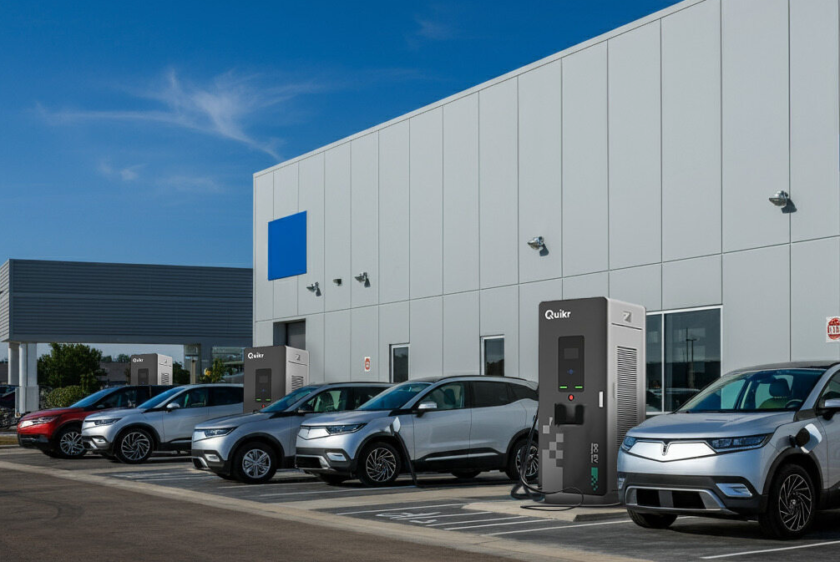
Electric vehicles are no longer just a future concept—they’re quickly becoming the standard for modern business operations. As companies look for ways to reduce costs, improve efficiency, and meet sustainability goals, many are making the shift from traditional fleets to electric ones.
An EV fleet refers to a group of electric vehicles—such as battery electric vehicles (BEVs) or plug-in hybrid vehicles (PHEVs)—that are owned or operated by a business. These fleets are used across industries, from logistics and delivery to corporate transportation and field services.
But switching to electric is only part of the equation. To truly benefit from this transition, businesses need to manage these vehicles differently. This is where EV fleet management comes in. It involves overseeing the full operation of an electric fleet, including charging infrastructure, energy consumption, battery performance, route planning, and overall fleet efficiency.
Unlike traditional fleet management, EV fleet management is far more data-driven and interconnected. It requires a combination of smart charging strategies, advanced software, and operational planning to ensure vehicles are always ready, costs are controlled, and performance is optimized.
In this guide, we’ll break down everything you need to know—from the key responsibilities of managing an EV fleet and why businesses are making the switch, to charging strategies, technology, costs, challenges, and how to maximize your return on investment. Whether you’re just starting to explore electrification or looking to optimize an existing fleet, this article will give you a clear, practical roadmap to get it right
What Is an EV Fleet and EV Fleet Management?
An electric vehicle (EV) fleet refers to a group of electric vehicles—such as battery electric vehicles (BEVs) or plug-in hybrids (PHEVs)—owned or operated by a business. These fleets are increasingly replacing traditional fuel-powered vehicles as companies shift toward sustainability and cost efficiency.
EV fleet management is the process of overseeing all aspects of operating these electric vehicles. Unlike traditional fleet management, it involves managing not only vehicles but also charging infrastructure, energy consumption, and battery performance.
At its core, EV fleet management focuses on:
- Monitoring vehicle performance and battery health
- Managing charging schedules and infrastructure
- Optimizing routes based on range and energy usage
- Reducing operational costs and emissions
- Ensuring driver efficiency and proper EV usage
As businesses transition to electric mobility, managing fleets becomes more data-driven and technology-focused than ever before .
Key Responsibilities of an EV Fleet Manager
Managing an electric fleet requires a broader and more technical skill set compared to traditional fleet management. EV fleet managers must balance operational efficiency, cost control, and sustainability goals.
Core responsibilities include:
- Charging management: Ensuring vehicles are charged efficiently without downtime
- Energy optimization: Balancing electricity usage and reducing peak energy costs
- Driver training: Educating drivers on EV usage, charging, and range management
- Fleet monitoring: Tracking vehicle performance, battery health, and utilization
- Financial oversight: Managing budgets for vehicles, charging infrastructure, and operations
- Sustainability alignment: Meeting environmental targets and compliance standards
A successful EV fleet manager relies heavily on data insights and centralized systems to make informed decisions and maintain smooth operations .
Why Businesses Are Switching to Electric Fleets
The shift toward electric fleets is accelerating as businesses respond to changing economic, environmental, and regulatory pressures. What was once an emerging trend is now becoming a strategic priority across industries.
Key reasons driving this transition include:
- Lower long-term operating costs:
Despite higher upfront investment, EVs reduce ongoing expenses through lower energy costs and simplified maintenance, improving overall cost efficiency over time. - Sustainability and emissions reduction:
Electric fleets help businesses significantly reduce their carbon footprint, supporting environmental goals and aligning with global sustainability initiatives. - Regulatory compliance:
Governments are introducing stricter emissions regulations and low-emission zones, making EV adoption essential for continued operations in certain regions. - Access to incentives and financial support:
Subsidies, tax benefits, and grants make it more financially viable for businesses to transition to electric vehicles. - Technological advancements:
Improvements in battery technology, charging infrastructure, and fleet management software have made EVs more practical and scalable for commercial use. - Brand and competitive advantage:
Adopting EVs enhances a company’s image as a forward-thinking, environmentally responsible business, which can attract customers and partners.
As these factors continue to evolve, businesses that adopt electric fleets early are better positioned to reduce costs, meet regulations, and stay competitive in a rapidly changing market.
Key Benefits of EV Fleet Management
Lower operating costs
While electric vehicles typically require a higher initial investment, they significantly reduce long-term operational expenses. Electricity is generally more cost-stable and cheaper than fuel, especially when fleets use off-peak charging strategies. In addition, EVs have fewer mechanical components, which lowers maintenance and repair costs over time. Businesses can also benefit from reduced downtime, as fewer breakdowns and service needs keep vehicles on the road longer. When analyzed over the full lifecycle, many fleets achieve a lower total cost of ownership (TCO) compared to internal combustion vehicles.
Reduced emissions
Electric fleets play a critical role in helping organizations meet environmental and sustainability targets. EVs produce zero tailpipe emissions, which directly reduces air pollution in urban areas. Even when accounting for electricity generation, overall emissions are significantly lower than traditional vehicles. This reduction supports compliance with environmental regulations and aligns with corporate ESG (Environmental, Social, Governance) commitments. For businesses operating in regions with strict emissions policies, EV fleets also enable access to low-emission zones without operational restrictions.
Simplified maintenance
Electric vehicles are inherently simpler than traditional vehicles because they lack complex components such as engines, exhaust systems, and multi-gear transmissions. This eliminates the need for routine services like oil changes, spark plug replacements, and fuel system maintenance. As a result, maintenance schedules are less frequent, easier to manage, and more predictable. Additionally, features like regenerative braking reduce wear on brake components, extending their lifespan and further lowering maintenance costs.
Improved operational efficiency
EV fleet management relies heavily on data and automation, which enables more efficient operations. Fleet managers can optimize charging schedules, assign vehicles based on battery levels, and plan routes that maximize energy efficiency. Real-time monitoring of vehicle performance and energy consumption allows for faster decision-making and better resource allocation. This level of control minimizes idle time, reduces unnecessary charging, and ensures vehicles are always ready for deployment.
Enhanced driver experience
Electric vehicles provide a smoother and quieter driving experience compared to traditional vehicles. Reduced noise and vibration contribute to less driver fatigue, especially for long or repetitive routes. In addition, EVs often come equipped with advanced digital interfaces and driver-assist features that improve usability and safety. When supported by proper training and intuitive charging systems, drivers can operate more efficiently and confidently, which ultimately improves productivity and job satisfaction.
Future-proofing your business
As governments and industries continue to push toward decarbonization, adopting EV fleets positions businesses ahead of regulatory changes and market shifts. Many countries are introducing policies to phase out internal combustion vehicles, making early adoption a strategic advantage. EV fleets also open opportunities to integrate with emerging technologies such as smart grids, renewable energy systems, and vehicle-to-grid (V2G) solutions. By transitioning early, businesses reduce future risk, maintain compliance, and stay competitive in an evolving transportation landscape.
How to Build an Effective EV Fleet Charging Strategy
Creating a reliable charging strategy is one of the most critical steps in successful EV fleet management. Unlike traditional fueling, charging requires planning around time, energy availability, infrastructure capacity, and operational schedules. A well-designed strategy ensures vehicles are always ready while minimizing costs and avoiding operational disruptions.
Assess your fleet’s operational requirements
Start by analyzing how your fleet operates on a daily basis. This includes understanding average and maximum mileage, route patterns, idle time, and vehicle usage cycles. These factors determine how often vehicles need to charge and how much energy they require. For example, fleets with predictable routes and overnight downtime can rely heavily on depot charging, while high-utilization fleets may require mid-day fast charging solutions.
Select the right mix of charging types
Different charging technologies serve different operational needs, and most fleets require a combination of them:
- Level 1 charging is slow and typically used only as a backup or for low-demand scenarios
- Level 2 charging is the standard for fleet operations, ideal for overnight depot charging
- DC fast charging is used for rapid top-ups during the day or for high-mileage vehicles
Choosing the right mix depends on your fleet’s duty cycle, turnaround time, and required vehicle availability.
Plan your charging infrastructure strategically
Charging infrastructure should be designed based on both current needs and future scalability. Key considerations include:
- Depot charging: Centralized charging at your facility for maximum control and cost efficiency
- Public charging networks: Useful for extending range during operations or covering remote routes
- Home charging: Suitable for light-duty fleets or distributed teams, with reimbursement systems in place
It’s also essential to evaluate your site’s electrical capacity and plan upgrades if needed to support multiple chargers simultaneously.
Implement smart charging and load management
Charging multiple vehicles at once can strain your electrical system and increase energy costs. Smart charging solutions help manage this by:
- Scheduling charging during off-peak electricity hours to reduce costs
- Balancing power distribution across vehicles to avoid overload
- Prioritizing vehicles based on route schedules and battery levels
This ensures that critical vehicles are always ready while optimizing overall energy usage.
Optimize charging schedules using data
Charging should not be treated as a fixed routine. Instead, it should be dynamically optimized based on real-time and historical data such as:
- State of charge (SoC) levels
- Route assignments and departure times
- Charging duration and energy consumption patterns
By analyzing this data, fleet managers can stagger charging sessions, reduce wait times, and improve charger utilization.
Integrate charging with route and operations planning
An effective strategy connects charging with daily operations. This means:
- Assigning vehicles to routes based on available battery range
- Planning charging stops along longer routes
- Avoiding unnecessary detours or downtime
Integrating charging into dispatch and route planning ensures seamless operations without interruptions.
Monitor performance and continuously improve
A charging strategy should evolve over time. Regularly monitor key metrics such as:
- Charging costs per vehicle
- Charger utilization rates
- Energy consumption trends
- Downtime related to charging
EV Fleet Software & Technology Stack
Managing an electric fleet goes far beyond vehicles and charging stations—it requires a connected ecosystem of software and technologies that work together to optimize operations. Unlike traditional fleets, EV fleets generate a large volume of data related to energy usage, battery performance, charging behavior, and route efficiency. Without the right tools, this complexity can quickly become difficult to manage.
A well-integrated technology stack enables fleet managers to monitor operations in real time, automate decision-making, reduce costs, and improve overall efficiency. It transforms EV fleet management from a manual process into a data-driven system that continuously adapts and improves performance.
Key components of an EV fleet technology stack include:
- Fleet management platforms: Centralized systems that provide visibility into vehicle location, utilization, and overall fleet performance, allowing managers to coordinate operations efficiently.
- Telematics systems: Advanced tracking tools that monitor real-time data such as state of charge (SoC), battery health (SoH), energy consumption, and driver behavior, enabling more informed operational decisions.
- Energy management systems: Solutions designed to control and optimize electricity usage, including smart charging, load balancing, and cost optimization based on energy pricing.
- Charging management software: Platforms that schedule, monitor, and control charging sessions across multiple vehicles and locations, ensuring efficient use of infrastructure and minimizing downtime.
- Analytics and reporting tools: Data-driven insights that help identify trends, measure performance, and optimize key metrics such as energy efficiency, cost per mile, and fleet utilization.
- AI and predictive technologies: Advanced tools that use machine learning to forecast maintenance needs, optimize routes, and improve charging strategies based on historical and real-time data.
- System integrations: Connectivity with logistics, dispatch, and enterprise systems to ensure seamless operations across the entire business workflow.
By combining these technologies into a unified system, businesses can gain full control over their EV fleet operations, improve efficiency, and scale their electrification strategy with confidence.
Cost of Electrifying Your Fleet (Total Cost of Ownership Explained)
Transitioning to an electric fleet requires a shift in how businesses evaluate costs. Instead of focusing only on the upfront purchase price, companies need to consider the total cost of ownership (TCO)—which includes all expenses incurred over the vehicle’s lifecycle. While EVs often come with higher initial costs, their long-term financial benefits can outweigh those investments when managed correctly.
Understanding TCO helps fleet managers make informed decisions, justify investments, and accurately measure the financial impact of electrification.
Key cost components to consider include:
- Vehicle acquisition costs: This includes the purchase or lease price of electric vehicles, which is typically higher than traditional vehicles. However, this cost can be offset through government incentives, tax benefits, and bulk purchasing agreements.
- Charging infrastructure investment: Businesses must account for the cost of installing charging stations, electrical upgrades, and ongoing infrastructure maintenance. The scale of this investment depends on fleet size, charging speed requirements, and site capacity.
- Energy (electricity) costs: Electricity replaces fuel as the primary operating cost. While generally lower than petrol or diesel, costs can vary depending on charging time, location, and energy tariffs. Optimizing charging during off-peak hours can significantly reduce expenses.
- Maintenance and repair costs: EVs typically have lower maintenance costs due to fewer moving parts and reduced wear on components like brakes. However, businesses should still plan for battery-related maintenance and specialized servicing when required.
- Battery lifecycle and replacement: Batteries degrade over time, which can impact vehicle performance and range. While most batteries are designed to last many years, potential replacement costs should be factored into long-term planning.
- Operational efficiency gains: EV fleets often reduce downtime and improve efficiency through better route planning, fewer breakdowns, and optimized energy usage. These indirect savings contribute significantly to overall cost reduction.
- Incentives and financial benefits: Many governments offer subsidies, tax exemptions, and other financial incentives to encourage EV adoption. These can substantially lower the total cost of ownership and improve return on investment.
By evaluating all of these factors together, businesses can gain a realistic understanding of the financial impact of electrification. In many cases, despite higher upfront costs, EV fleets deliver lower lifetime costs and stronger long-term value compared to traditional fleets.
Key Considerations Before Switching to an EV Fleet
Transitioning to an electric fleet requires more than just replacing vehicles—it involves rethinking operations, infrastructure, and energy management. Proper planning ensures a smooth transition and helps avoid costly mistakes.
Before making the switch, businesses should evaluate the following:
- Fleet usage and operational needs: Analyze daily mileage, routes, and load requirements to determine whether EVs can meet your operational demands without affecting productivity.
- Charging infrastructure readiness: Assess whether you will rely on depot, public, or home charging, and ensure your facilities have the electrical capacity to support your fleet.
- Energy management and costs: Understand how electricity consumption will impact your operating expenses and explore strategies like off-peak charging to reduce costs.
- Vehicle selection and suitability: Choose EV models that align with your specific use cases, including range, payload capacity, and performance requirements.
- Driver training and adoption: Prepare drivers with the knowledge needed to operate EVs efficiently, including charging habits and range management.
- Environmental and external factors: Consider how weather conditions, terrain, and local infrastructure may affect battery performance and overall fleet efficiency.
Carefully evaluating these factors will help businesses transition to electric fleets with confidence while maximizing performance and cost efficiency.
Measuring ROI of EV Fleet Management
Evaluating the return on investment (ROI) of an EV fleet requires looking beyond upfront costs and focusing on long-term financial and operational gains. A well-managed electric fleet can deliver measurable savings and performance improvements over time.
To accurately assess ROI, businesses should consider:
- Fuel vs. electricity savings: Compare traditional fuel costs with electricity expenses, taking into account charging optimization strategies that can further reduce energy costs.
- Maintenance cost reduction: Factor in lower servicing needs due to fewer mechanical components, along with reduced downtime from fewer breakdowns.
- Vehicle utilization and uptime: Measure how efficiently vehicles are used and how often they are available for operation, as improved uptime directly impacts productivity.
- Infrastructure and operational costs: Include investments in charging infrastructure, software, and energy management systems when calculating overall returns.
- Incentives and financial support: Account for government subsidies, tax benefits, and other incentives that reduce initial investment and improve profitability.
- Intangible business value: Consider non-financial benefits such as improved brand image, sustainability positioning, and compliance with environmental regulations.
By combining these factors, businesses can gain a complete view of ROI and better understand how EV fleet management contributes to long-term cost savings and strategic growth.
Common Challenges in EV Fleet Management
While electric fleets offer significant advantages, they also introduce new operational complexities that businesses must address. Understanding these challenges early allows fleet managers to plan effectively and minimize disruptions.
Key challenges include:
- Charging infrastructure limitations:
Limited availability of charging stations—especially in certain regions or along specific routes—can impact fleet operations and require careful planning. - Range limitations and route constraints:
EVs have fixed battery ranges, making it essential to align routes with available charge and avoid unexpected downtime. - Energy demand and grid capacity:
Charging multiple vehicles simultaneously can strain electrical systems, particularly at depot locations without proper load management. - Higher upfront investment:
The initial cost of vehicles, charging infrastructure, and software can be significant, requiring careful financial planning. - Operational complexity:
Managing charging schedules, energy usage, and vehicle availability adds new layers of complexity compared to traditional fleets. - Battery performance and degradation:
Over time, battery capacity decreases, which can affect vehicle range and long-term performance if not properly managed.
By proactively addressing these challenges with the right strategy and technology, businesses can successfully operate and scale their EV fleets.
EV Fleet Maintenance
Effective maintenance is a critical part of successful EV fleet management, ensuring vehicles remain reliable, efficient, and cost-effective over time. While electric vehicles require less routine servicing than traditional vehicles, they still need a structured maintenance strategy focused on battery health, charging systems, and data-driven monitoring.
Key best practices include:
- Predictive maintenance using data:
Leverage telematics and fleet management systems to monitor vehicle performance in real time and identify potential issues before they lead to failures or downtime. - Battery health management:
Maintain optimal charge levels (typically between 20–80%) and avoid excessive fast charging to reduce battery degradation and extend lifespan. - Charging infrastructure maintenance:
Regularly inspect and service charging stations to ensure reliability, minimize downtime, and maintain consistent charging performance. - Monitoring key performance metrics:
Track data such as state of charge (SoC), energy consumption, and charging cycles to optimize vehicle performance and detect inefficiencies. - Driver training and best practices:
Educate drivers on efficient driving habits, proper charging procedures, and equipment handling to improve performance and reduce wear. - Sustainability and lifecycle management:
Plan for battery recycling, reuse, or second-life applications while exploring renewable energy integration to further reduce environmental impact.
By implementing these practices, businesses can maximize vehicle lifespan, reduce operational disruptions, and ensure their EV fleet operates at peak performance.
EV Fleet Regulations and Incentives in the UAE
Businesses operating EV fleets in the UAE must comply with local regulations and take advantage of available incentives.
Key areas include:
- Government initiatives promoting electric mobility
- Incentives such as reduced registration fees and subsidies
- Emission reduction targets
- Compliance with charging infrastructure standards
Staying updated with regulations ensures compliance while maximizing financial benefits.
Choosing the Right EV Fleet Partner in the UAE
Transitioning to an electric fleet involves multiple moving parts—from selecting the right vehicles to setting up charging infrastructure and managing daily operations—making it essential to work with an experienced partner. In the UAE, Quikr provides end-to-end EV fleet solutions tailored to business needs, helping companies navigate the complexities of electrification with confidence. From planning and deploying charging infrastructure to implementing advanced fleet management technologies and ongoing operational support, Quikr enables businesses to reduce costs, improve efficiency, and meet sustainability goals. By partnering with a reliable provider, companies can accelerate their transition while ensuring long-term performance and scalability.
Conclusion
EV fleet management is rapidly becoming a core component of modern business operations, driven by the need for greater efficiency, lower costs, and sustainable practices. While the transition to electric fleets introduces new challenges—such as charging infrastructure, energy management, and operational complexity—it also unlocks significant long-term value when approached strategically. By combining the right vehicles, a well-planned charging strategy, advanced technology, and strong operational practices, businesses can fully capitalize on the benefits of electrification. As the shift toward electric mobility continues to accelerate, organizations that invest early and partner with the right experts will be best positioned to stay competitive, compliant, and future-ready.