
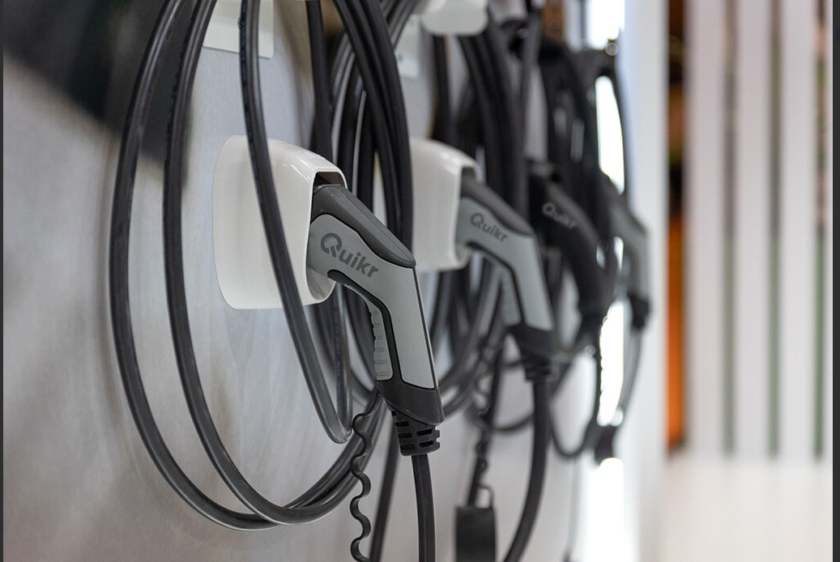
Electric vehicles (EVs) rely on a charging system that may seem simple at first glance, but behind it lies a variety of cable types and connector standards. Understanding these components is essential for any EV owner or prospective buyer, as they directly affect how, where, and how fast a vehicle can be charged.
At the most basic level, an EV charging setup includes two key elements: the cable and the connector. The cable carries electrical power from the source, such as a home charger or public charging station, while the connector is the physical interface that connects the charging equipment to the vehicle. Together, they form the critical link between the power supply and the EV.
One of the main challenges in EV charging is the lack of a single global connector standard. Different regions and manufacturers have adopted different systems over time. As a result, EV owners encounter multiple connector designs, charging modes, power capabilities, and compatibility considerations.
Understanding EV charging cables and connectors helps drivers:
- Ensure compatibility with their vehicle and local infrastructure
- Choose the right cable for home or public charging
- Maximize available charging performance
- Avoid unnecessary compatibility problems
- Use charging equipment more safely
- Make more future-ready purchasing decisions
As the EV market continues to grow and evolve, understanding these fundamentals is increasingly important not only for convenience but also for choosing charging equipment that suits your vehicle and driving habits.
In this guide, we’ll break down the different EV charging connectors and cable types, explain AC and DC charging, compare common cable configurations, and help you choose the right EV charging cables for your needs in the UAE.
Types of EV Charging Connectors
EV charging connectors are not universal. Different regions and vehicle manufacturers use different standards, each with its own design, electrical capabilities, and intended applications.
Broadly, charging connections can be divided into:
- AC connectors, commonly used for home, workplace, and destination charging
- DC fast-charging connectors, designed to deliver high-power charging at suitable public and commercial stations
Below are some of the most important connector types EV drivers may encounter.
3.1 Type 1 (SAE J1772)
Type 1, commonly associated with SAE J1772, is an AC charging connector widely found on North American and Japanese-market EVs, particularly older or imported models.
Key characteristics include:
- Type: AC charging
- Design: 5-pin connector
- Electrical configuration: Primarily single-phase
- Common markets: North America and Japan
Many Type 1-equipped vehicles charge at rates around 7.4kW or below, although actual charging capability depends on the specific EV, charging equipment, and electrical supply.
Compared with Type 2, Type 1 does not provide the same three-phase AC flexibility.
3.2 Type 2 (Mennekes)
Type 2, also known as the Mennekes connector, is widely used for AC charging across Europe and many other international markets.
Key characteristics include:
- Type: AC charging
- Design: 7-pin connector
- Electrical configuration: Single-phase and three-phase
- Typical applications: Home, workplace, destination, and public AC charging
- Common charging powers: 7kW, 11kW, and 22kW depending on the charger, vehicle, and electrical supply
Some infrastructure can support higher AC outputs, but the vehicle’s onboard charger ultimately determines how much AC power it can accept.
Its ability to support both single-phase and three-phase charging has made Type 2 one of the most widely used AC connector standards.
3.3 CCS (Combined Charging System)
The Combined Charging System (CCS) extends an AC connector design with additional DC contacts, allowing compatible vehicles to use both AC and high-power DC charging through a combined vehicle inlet.
Two major variants are:
- CCS1: Based on the Type 1/J1772 architecture
- CCS2: Based on the Type 2 architecture
CCS2 is particularly important across Europe, the UAE, and many other markets.
DC charging capability varies greatly according to the vehicle and charging station. High-power CCS infrastructure can deliver several hundred kilowatts where supported.
The main advantage of CCS is flexibility: compatible vehicles can use AC charging for everyday needs and DC fast charging when faster energy replenishment is required.
3.4 CHAdeMO
CHAdeMO is a DC fast-charging system originally developed in Japan.
Key characteristics include:
- Type: DC fast charging
- Origin: Japan
- Common use: Japanese EVs, particularly older models
- Notable capability: Support for bidirectional charging in compatible implementations
CHAdeMO requires a separate DC charging interface rather than combining AC and DC connections in the same way as CCS.
Although it remains available on some charging networks, CCS has become increasingly prominent in many newer international EV markets.
3.5 GB/T (China Standard)
GB/T refers to charging standards widely used within the Chinese EV market.
China uses dedicated standards for both AC and DC charging, and the connectors are physically and technically different from European Type 2 and CCS2 systems.
Important points include:
- Dominant charging standard in China
- Used by many Chinese-market EVs
- Separate AC and DC charging arrangements
- May require compatible adapters or charging equipment when Chinese-market vehicles are used in other regions
A connector that looks similar to Type 2 should never be assumed to be electrically or physically interchangeable with GB/T.
3.6 Tesla / NACS (Emerging Standard)
Tesla’s North American connector has developed into what is now standardized through SAE as J3400, commonly referred to as NACS.
Key characteristics include:
- Supports AC and DC charging
- Compact physical design
- Strong adoption across North America
- Increasing support from vehicle manufacturers and charging networks in that region
AC vs. DC EV Charging: What’s the Difference?
Understanding the difference between AC and DC charging helps explain why EVs use different connectors and cables for different charging situations.
The key difference is where the conversion from alternating current (AC) to direct current (DC) takes place.
AC Charging and How It Works
Homes and most buildings receive electricity as AC power.
During AC EV charging, the charging equipment supplies AC electricity to the vehicle. The EV’s onboard charger then converts that electricity into DC before it reaches the battery.
AC charging is commonly used for:
- Home charging
- Workplace charging
- Hotel and destination charging
- Long-duration parking
- Overnight charging
Because the vehicle performs the conversion, the maximum charging rate depends heavily on the capacity of its onboard AC charger.
DC Fast Charging and How It Works
With DC fast charging, conversion takes place inside the charging station rather than inside the vehicle.
The station supplies DC power more directly to the EV battery through the vehicle’s fast-charging system.
This allows substantially higher charging power and is why DC chargers are commonly used at:
- Motorway charging locations
- Public fast-charging hubs
- Petrol stations
- Fleet facilities
- High-traffic commercial sites
DC charging equipment is considerably larger and more complex than typical residential AC equipment.
Which Connectors Are Used for AC and DC Charging?
Common examples include:
AC charging:
- Type 1 / J1772
- Type 2
- GB/T AC
- SAE J3400/NACS in applicable markets
DC charging:
- CCS1
- CCS2
- CHAdeMO
- GB/T DC
- SAE J3400/NACS in compatible North American applications
Always check the specific vehicle and charging station rather than assuming compatibility based solely on region.
EV Charging Cable Types
While most discussions focus on connectors, EV charging cables are equally important.
The cable determines how electricity and communication signals are carried between the EV and the charging equipment. Its construction, phase capability, current rating, and connector configuration can all affect your charging setup.
4.1 Mode 1, 2, 3, and 4 Charging Cables
EV conductive charging is commonly described through several charging modes.
Mode 1 — Basic AC Charging
Mode 1 refers to basic charging from a conventional electrical socket without the dedicated control functions associated with modern EV charging equipment.
It is not the normal preferred solution for modern EV home charging and may be restricted depending on local requirements.
Mode 2 — Portable Charging Cable
Mode 2 uses a portable cable with an In-Cable Control and Protection Device between the electrical socket and the EV.
It is commonly associated with portable or occasional charging arrangements.
Drivers should only use appropriate sockets and equipment designed to safely support the required continuous electrical load.
Mode 3 — Dedicated AC Charging
Mode 3 is the standard approach for charging from dedicated AC EV charging equipment.
It provides controlled communication between the EV and charging station and is widely used for:
- Home wallboxes
- Workplace chargers
- Destination chargers
- Public AC charging
Mode 3 EV charging cables are among the most important cables for everyday EV ownership because they provide the dedicated connection used with many residential and public AC charging points.
Mode 4 — DC Fast Charging
Mode 4 refers to DC charging where conversion takes place in the charging station.
Because of the high power involved, the charging cable is typically permanently attached to the DC charging equipment rather than carried by the driver.
In everyday use, EV owners are therefore more likely to personally handle Mode 2 and Mode 3 cables.
4.2 Tethered vs. Untethered Cables
Another important difference is whether the charging cable is permanently attached to the charger.
Tethered Cables
A tethered charger has its cable permanently attached.
Advantages include:
- Fast, convenient daily use
- No need to retrieve a separate cable
- Ideal for regular home charging
The main limitation is that the fixed connector must remain compatible with the vehicle you intend to charge.
Untethered Cables
An untethered charger provides a socket rather than a permanently attached vehicle cable.
The driver connects their own compatible charging cable.
Advantages include:
- Greater flexibility
- Easier cable replacement
- Ability to store the cable separately
- Useful where several compatible vehicle configurations need to be considered
Untethered Type 2 charging points are commonly encountered in markets using Type 2 AC infrastructure.
4.3 Single-Phase vs. Three-Phase Cables
EV charging cables must also be selected according to the electrical system and charging power they are expected to carry.
Single-Phase Cables
Single-phase charging is common in residential environments.
A common home charging configuration is approximately 7kW, where supported by the electrical supply and vehicle.
This is often sufficient for overnight charging.
Three-Phase Cables
Three-phase charging can support higher AC charging rates, such as 11kW or 22kW, where the electrical infrastructure, charging equipment, cable, and EV all support them.
A three-phase cable does not automatically make the EV charge faster. The vehicle must also have an onboard charger capable of accepting the available power.
EV Charging Standards in the UAE
In the UAE, EV charging infrastructure uses several international standards, with Type 2 playing a major role in AC charging and CCS2 widely relevant to modern DC fast-charging infrastructure.
DEWA’s charging infrastructure in Dubai includes Type 2 AC connections as well as CCS and CHAdeMO interfaces on applicable fast chargers.
For drivers researching charging hardware or planning a home setup, our EV charger Dubai guide explains local installation considerations in greater detail.
CHAdeMO can still be encountered, particularly for compatibility with some Japanese EVs, although CCS2 has become increasingly important for newer vehicles and charging infrastructure.
Imported EVs may use other connectors, including GB/T, Type 1/J1772, or regional Tesla configurations. These vehicles may require compatible adapters or dedicated charging solutions.
Because connector configurations can vary even within the same automotive brand, UAE drivers should always confirm:
- Vehicle charging inlet
- AC charging standard
- DC charging standard
- Maximum supported charging power
- Charging-station connector
- Cable or adapter requirements
This is particularly important when purchasing an imported EV that was originally configured for another market.
How to Match an EV Charging Cable to Your Car
Choosing a compatible charging cable starts with your vehicle, not the charging station.
A cable may physically fit a charger but still be unsuitable for your EV if the connector type, electrical rating, or charging mode does not match. Taking a few minutes to verify your vehicle specifications can help avoid compatibility problems and unnecessary purchases.
Check Your EV’s Charging Port
Start by identifying the AC charging inlet on your vehicle.
Common examples include:
- Type 1 / J1772
- Type 2
- GB/T AC
- SAE J3400/NACS in applicable markets
Do not assume the connector based only on the vehicle brand because the same model can use different charging ports depending on the country in which it was originally sold.
Imported EVs in the UAE deserve particular attention because they may not use the connector normally associated with local charging infrastructure.
Match the Cable to Your EV’s Maximum Charging Power
Your EV’s onboard charger determines the maximum AC charging power the vehicle can accept.
For example, if your EV supports a maximum of 7kW AC, using a 22kW-rated cable and charging station will not make the vehicle charge at 22kW.
The charging rate is limited by the lowest-capacity component in the charging chain, including:
- Electrical supply
- Charging station
- Charging cable
- Vehicle onboard charger
Choosing a properly rated cable prevents the cable itself from unnecessarily limiting available charging performance.
Check the Cable’s Amperage and Voltage Rating
Every charging cable has a maximum electrical rating.
Before purchasing, verify:
- Maximum current
- Maximum voltage
- Single-phase or three-phase capability
- Maximum supported charging power
The cable should be rated appropriately for the charging equipment and vehicle you plan to use.
Never use a cable beyond its manufacturer-specified electrical limits.
Make Sure the Cable Is Compatible With Your Charger
Finally, confirm the charging-station side of the connection.
For example, an untethered Type 2 charging station normally requires an appropriate Type 2 cable on the infrastructure side.
If your vehicle uses a different connector, you may require an approved adapter or a different charging solution.
Always think of the full charging path:
Charging station → Cable → Adapter, if required → Vehicle
All parts need to be electrically and physically compatible.
What Specifications Should You Look for in an EV Charging Cable?
Not all EV charging cables are built to the same specification.
Beyond connector compatibility, several characteristics influence everyday convenience, charging performance, and long-term durability.
Cable Length
Cable length affects how easily you can reach your charging port.
Common residential cables are often approximately 5 to 10 meters long.
A longer cable gives you more flexibility when:
- Parking orientation changes
- The charger is mounted farther from the vehicle
- Multiple parking spaces share a charger
However, longer cables are heavier and can be less convenient to store.
Choose enough length to reach your EV comfortably without creating unnecessary cable clutter.
Amperage and Power Rating
The cable must be rated for the electrical current your charging setup may deliver.
Higher-current cables generally use larger conductors and may be heavier.
Make sure the cable’s rating supports at least the maximum charging rate you realistically expect to use.
Single-Phase or Three-Phase Compatibility
If your property and EV support three-phase charging, choose a cable designed to support it.
A single-phase cable may limit charging performance even when both the charging station and vehicle are capable of higher three-phase AC charging.
For drivers expecting to upgrade vehicles later, a suitably rated three-phase cable may offer greater flexibility.
Weather Resistance and Durability
UAE charging equipment can be exposed to:
- High ambient temperatures
- Strong sunlight
- Dust
- Sand
- Humidity
- Repeated outdoor use
Look for cables constructed from durable materials with manufacturer-specified temperature and environmental resistance suitable for their intended use.
Good cable management also matters. Avoid leaving cables permanently stretched across rough surfaces or exposed to vehicle traffic.
Cable Safety and Certification
Choose products with clear manufacturer specifications and relevant conformity or certification information.
Depending on the market and product, this may include compliance with recognized IEC or other applicable standards.
Avoid cables with:
- No identifiable manufacturer
- Missing electrical ratings
- Poor-quality connector housings
- Unverifiable certification claims
- Visible manufacturing defects
A charging cable carries sustained electrical load for extended periods, so build quality should always take priority over the lowest purchase price.
How to Choose the Right EV Charging Cable
Choosing the right EV charging cable is essential for safe, convenient, and efficient charging.
The best option depends on your EV, where you charge, and how much charging power your vehicle can use.
Choose Based on Your EV Connector
Your vehicle inlet is the starting point.
If your EV has a Type 2 inlet, a Type 2 cable will usually be the natural choice for compatible AC infrastructure.
If your EV has a Type 1, GB/T, or another regional connector, you may need a different cable or an appropriate adapter.
Never assume two similar-looking connectors are interchangeable.
Consider Your Charging Location
Think about where you charge most frequently:
At home:
A tethered charger can provide maximum convenience because the cable remains attached and ready to use.
At public AC stations:
You may need to carry an untethered charging cable.
While travelling:
Connector compatibility, cable portability, and adapter requirements become more important.
Your everyday charging environment should guide your purchase.
Choose the Right Cable Length
A 5-meter cable may be ideal when the charger is mounted close to the parking space.
A longer cable can provide more flexibility when:
- Your vehicle charging port is on the opposite side
- You frequently park in different orientations
- More than one parking position is involved
Choose enough length for practical use without making storage unnecessarily difficult.
Match the Cable to Your Charging Speed
Check the maximum AC charging rate of your EV and the charging station you intend to use.
If your vehicle supports 11kW three-phase AC charging, for example, your cable should also support that configuration if you want access to the full available rate.
A lower-rated cable can become the limiting component in the charging system.
Consider Your Daily Charging Needs
Not every EV owner needs the highest-powered cable available.
Consider:
- Daily driving distance
- Overnight parking duration
- Home electrical supply
- Frequency of public charging
- Future EV purchases
- Whether you expect to use three-phase charging later
The right cable is the one that supports your real-world needs without unnecessary complexity.
Not sure which EV charging cable is right for your car?
Our experts can help you choose the right connector, cable type, and charging solution for your EV.
Whether you need help identifying your vehicle’s port, selecting the correct power rating, or choosing a cable for home and public charging, Quikr can help you make the right decision.
[Find the Right EV Charging Cable]
Quikrev EV
Home Charger 22kW
ADQCC Certified · 22kW · Wi-Fi & Bluetooth · Type 2 / GBT
Professional EV Charger Installation in the UAE with Quikr
Choosing the right EV charging cable and connector is only part of the equationthe reliability of your charging setup also depends heavily on proper installation.
This is where Quikr comes in.
As an EV charging solutions provider in the UAE, Quikr supports both residential and commercial customers with end-to-end charging solutions.
Whether you need:
- A home charger for a villa
- Charging infrastructure for an apartment development
- Workplace chargers
- Fleet charging
- Commercial charging systems
Quikr can help assess the property, recommend suitable charging equipment, complete professional installation, configure smart features, and provide ongoing support.
Professional installation helps ensure that:
- The electrical supply is suitable.
- Charger capacity matches the property.
- Protective equipment is correctly specified.
- Cable routing is appropriate.
- Smart charging features are configured properly.
- The overall system is safe and reliable.
With local expertise and support across UAE markets, Quikr helps make EV charging simpler from equipment selection through installation and after-sales service.
Frequently Asked Questions (FAQs)
What is the most common EV charging connector in the UAE?
Type 2 is widely used for AC charging in the UAE, while CCS2 is highly relevant to modern DC fast-charging infrastructure.
However, some charging stations also support other standards, including CHAdeMO.
Always verify the connectors available at a specific charging location before travelling.
Can I use any charging cable with my EV in the UAE?
No.
The cable needs to match:
- Your vehicle’s charging inlet
- The charging station
- Required charging mode
- Electrical rating
For example, a Type 2-equipped EV using an untethered Type 2 AC charging station normally requires a compatible Type 2 cable.
Imported vehicles may require different cables or adapters.
Are public charging stations in the UAE compatible with all EVs?
Not necessarily.
Many modern UAE charging stations support commonly used standards such as Type 2 and CCS2, but connector availability varies by network and location.
Older, imported, or region-specific EVs may require adapters or may not support every public charging connector.
Check compatibility before arriving whenever possible.
What is the fastest charging option available in the UAE?
DC fast charging is generally the fastest option.
High-power CCS-compatible chargers can deliver significantly more power than AC home or destination chargers when the EV supports it.
Actual charging speed depends on:
- Charger output
- Vehicle maximum DC charging rate
- Battery state of charge
- Battery temperature
- Battery charging curve
The advertised station power does not guarantee that every EV will charge at that maximum rate.
Can I charge my EV at home in the UAE?
Yes.
Home AC charging is one of the most convenient charging options for UAE EV owners.
Common residential setups include 7kW, 11kW, or 22kW AC chargers depending on:
- Property electrical supply
- Vehicle capability
- Installation requirements
A professional site assessment can determine what your home can safely support.
Are EV charging cables safe to use in hot climates like the UAE?
Yes, provided they are high-quality products designed for their intended operating conditions and used correctly.
Look for:
- Appropriate operating-temperature specifications
- Durable insulation
- Suitable environmental protection
- Clear electrical ratings
- Recognized safety standards
Inspect the cable regularly for cracking, deformation, overheating, or connector damage.
Can I use adapters between different connector types in the UAE?
Adapters can provide compatibility in certain AC charging situations, but not every connector conversion is technically possible or appropriate.
Before using an adapter, check:
- Vehicle connector
- Charging station connector
- AC or DC charging mode
- Adapter direction
- Current and voltage rating
- Vehicle-manufacturer guidance
Passive AC adapters should never be assumed to provide DC fast-charging compatibility.
Is CCS replacing CHAdeMO in the UAE?
CCS2 has become increasingly important for newer EVs and charging infrastructure in the UAE and internationally.
CHAdeMO remains available at some locations and continues to serve compatible vehicles, particularly older Japanese models.
For drivers purchasing a newer EV, CCS2 compatibility generally provides broader access to expanding modern DC charging infrastructure.
Conclusion
Understanding EV charging connectors and EV charging cables is essential for getting the best experience from your electric vehicle.
The right setup depends on several connected factors:
- Vehicle connector
- AC and DC charging standards
- Charging-station compatibility
- Cable electrical rating
- Single-phase or three-phase capability
- Charging location
- Required cable length
- Vehicle maximum charging power
Type 1, Type 2, CCS, CHAdeMO, GB/T, and SAE J3400/NACS all serve different markets and charging applications. Knowing these distinctions makes it easier to avoid compatibility problems when charging at home or travelling.
For UAE drivers, Type 2 plays a major role in AC charging, while CCS2 is increasingly important for modern DC fast charging. Imported vehicles may require additional consideration because their original regional connector may differ from local infrastructure.
Ultimately, the best EV charging cable is not simply the one with the highest power rating. It is the cable that correctly matches your EV, charging equipment, everyday charging habits, and future needs.
By choosing certified, appropriately rated equipment and working with an experienced EV charging provider such as Quikr, you can build a charging setup that is convenient, reliable, and ready for everyday electric driving.




2 Comments
[…] different EV charging connectors and cable types is essential when choosing charging equipment, planning long-distance travel, or importing an […]
[…] For a broader understanding of connector and cable options, explore our guide to EV charging cables. […]